Sugar Reduction in Dairy, One Ingredient at a Time
In dairy, sugar does more than sweeten, so cutting it is never a straight swap. Here is how a sweet protein carries the sweetness across flavored milk, drinkable yogurt, spoonable yogurt and high-protein dairy, and what you keep or rebuild in each.


Formulation guide: dairy
Shoppers read the sugar line on dairy now. The International Food Information Council's 2025 survey found about three in four Americans are trying to limit or avoid sugar, and the International Dairy Foods Association reports flavored milk already averages about 7.2 grams of added sugar per serving, down from where it was a few years ago. The pressure is real, and it is not going away.
The hard part is that in dairy, sugar is never only sweetness. It balances the tang of a culture, it adds body to a drink, and it quietly covers the bitterness that shows up when you push protein higher. Take it out and all of that opens up at once. This guide is about doing it the honest way: let a sweet protein carry the one job it is built for, and keep or rebuild the rest with tools you already use.
The short version
UnSugar Sweet Protein is 1,000 times sweeter than sugar, dosed in milligrams, with a clean, sugar-like finish and no bitter tail. It replaces 60 to 90% of the sugar in suitable formulations, and up to 90% in fruit-forward dairy. It does one job, sweetness, so acidity, body and protein off-notes stay with your cultures, your bulking system and your blend. Start at a 65/35 blend and tune from there.
Consumers want less sugar, and they still want the pleasure
The demand is not really for "less sugar." It is for less sugar with the same taste. Consumer research keeps landing on the same point: taste is the deciding factor in whether a reduced-sugar product earns a second purchase, and many shoppers are wary of artificial sweeteners. In 2023 the World Health Organization advised against using non-sugar sweeteners for weight control, which has only sharpened that wariness. So the brief is narrow. Cut the sugar line, keep the taste, and do it with a sweetener story a label reader will accept.
Dairy is also where the two big reformulation pressures meet. Mintel has reported that households using GLP-1 medications buy yogurt at nearly three times the average rate, and those shoppers want protein up and sugar down in the same product. That is a dairy problem before it is anything else.
In dairy, sugar is doing more than one job
Before you change a formula, write down what sugar is actually doing in it. In most dairy products it is doing at least three things at once:
- Sweetness, at a level people know by heart.
- Balancing acidity. Cultured dairy is tart. Sugar rounds that tang. Pull it out and the sourness rises.
- Body and the protein cover. Sugar adds solids that give a drink body, and it softens the bitterness and astringency that get louder as you add protein.
A high-intensity sweet protein is excellent at the first job and does nothing for the other two. That is not a weakness to hide. It is the map. The categories that reformulate easily are the ones where sweetness was most of sugar's job. The ones that take real work are the ones where sugar was holding up the structure.
One ingredient, one job: the sweetness
UnSugar Sweet Protein is a sweet protein, a protein that tastes intensely sweet. Because it works at about one part per 1,000 parts of the sugar it replaces, it is dosed in milligrams and adds no sugars to the panel. It reads as clean, sugar-like sweetness and finishes without the bitter or metallic tail of a high-intensity sweetener. In a blend it can even round off the lingering notes of stevia and monk fruit, which is why we almost always start from a blend rather than a straight swap.
The default is a 65/35 blend: 65% of the sweetness from UnSugar Sweet Protein and 35% from the sweetener you use today. Your current sweetener gives the fast front sweetness, the sweet protein carries a clean finish, and you keep most of the sugar line off the label.
Sweetness architecture, category by category

Every dairy category has its own sweetness architecture, so the plan changes with the product.
Flavored milk. Mostly a sweetness job, so it is one of the friendliest places to start. Carry most of the sweetness with the sweet protein, keep a little sugar or lactose-derived sweetness for roundness, and watch the cocoa or fruit flavor, which often needs a small lift once the sugar drops. See our reduced-sugar chocolate milk formulation.
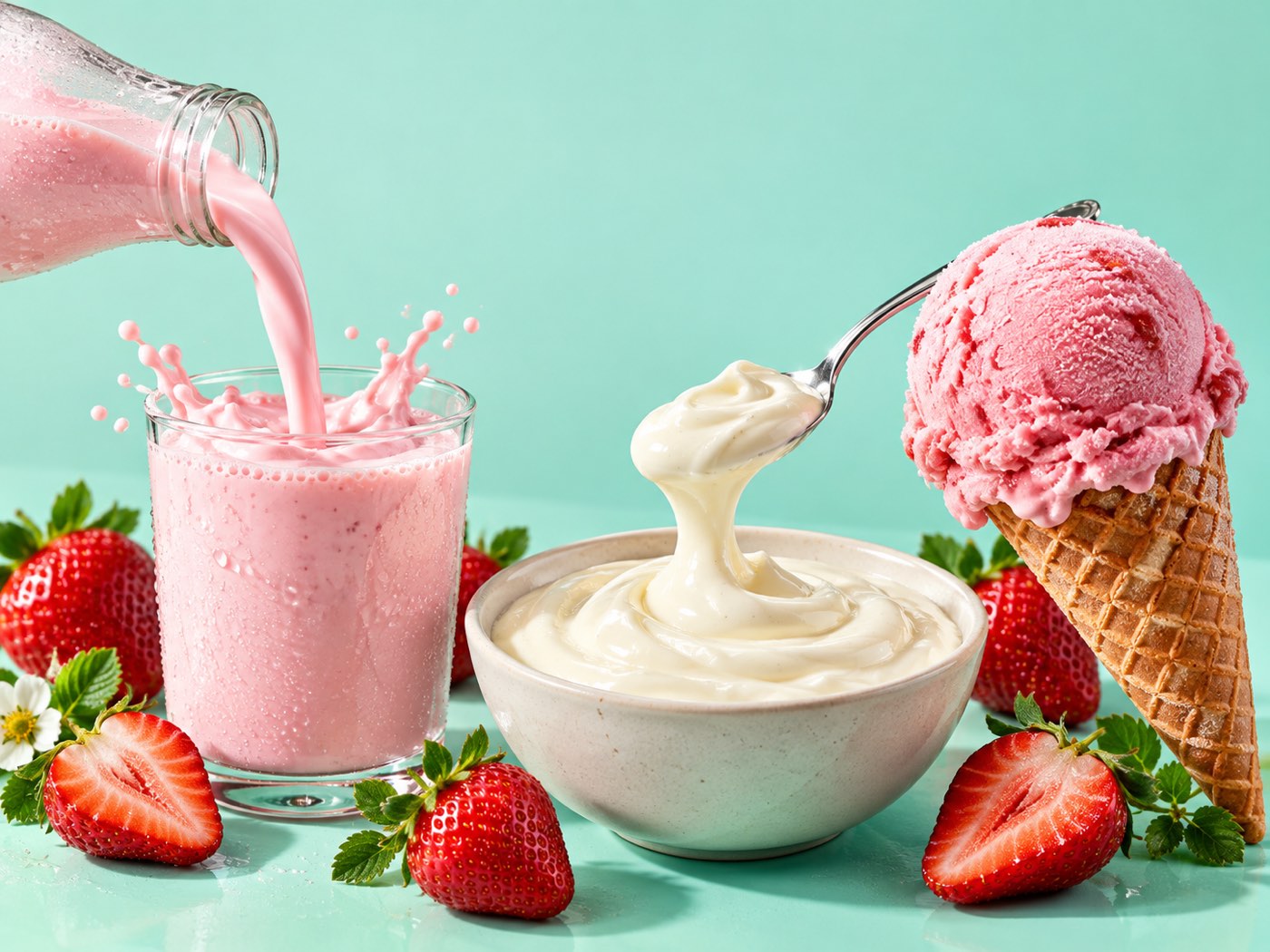
Drinkable yogurt. Sweetness plus acidity. The tang rises as sugar leaves, so pair the sweet protein with a milder culture or a small acidity adjustment, and keep the fruit prep doing some of the rounding. Our strawberry drinkable yogurt starter runs this play.
Spoonable yogurt. Sweetness, acidity and a little body. Deep cuts can read thin, so rebuild spoonable body with protein or a stabilizer rather than with more sweetener. The vanilla Greek yogurt formulation shows the balance.
High-protein dairy. This is where a sweet protein earns its place. As protein climbs, bitterness and astringency climb with it, and a clean sweetness on top covers them better than a sweetener that brings its own bitter edge. Up is the direction the market is moving, so it is worth getting right.
What you keep, and what you rebuild
Once the jobs are named, each one gets an owner, and most of them are already in your plant:
- Sweetness goes to UnSugar Sweet Protein, alone or alongside the stevia, monk fruit or small amount of sugar you keep.
- Acidity stays with your cultures and your acid balance. A milder culture route, or a touch less added acid, puts back the roundness sugar used to give.
- Body comes from allulose, soluble fiber or added dairy protein, not from more sweetener. More sweetener never fixes thin body.
- Protein off-notes get covered by the clean sweetness of the blend, and by your flavor system.
Notice what is not on that list: we do not ask you to buy a shelf of new technologies. The sweet protein changes one variable. The rest of your system does what it already does well.
A worked starting point

Take a drinkable yogurt at about 100 grams of sugar-equivalent sweetness per liter. A 65% move to the sweet protein is about 1.3 mL of the liquid, which is supplied as a 50 grams per liter concentrate, or about 65 mg of the powder per liter. The math is the same every time: the sweet protein is 1,000 times sweeter than sugar, so 1 gram of powder does the sweetening work of 1 kilogram of sugar, and 1 mL of the liquid replaces the sweetness of 50 g of sugar.
Run it for a week with that single line changed. If the tang reads high, soften the culture or ease the acid. If the body reads thin, add a little allulose or protein. Change one lever at a time.
Processing
UnSugar Sweet Protein holds its sweetness up to about 98 °C (208 °F), which covers pasteurization and most dairy heat steps. It comes as a liquid for ready-to-drink lines and a powder for dry mixes, and it is supplied at about pH 4.0 with a working range in published literature of pH 2.5 to 10, comfortable for cultured dairy. For a long shelf-life or a hot, long hold, send us the time and temperature first.
Get UnSugar Sweet Protein on your bench
Samples are free for qualified food and beverage teams: a 100 mL liquid bottle or powder packets of 1 g, 2 g or 10 g, with a sample guide and dosing help. One gram of powder can replace up to about 1 kg of sugar.
Quick answers
How much sugar can I take out of a dairy product? UnSugar Sweet Protein replaces 60 to 90% of the sugar in suitable formulations, and up to 90% in fruit-forward dairy like flavored milk and drinkable yogurt. Bench testing in your own product confirms the final number.
Does a sweet protein fix the whole reformulation? No, and that is the honest answer. It carries the sweetness. Acidity stays with your cultures, body comes from allulose, fiber or protein, and your flavor system does the rest. That is why we start from a job map, not a single ingredient.
Will a reduced-sugar yogurt taste more sour? It can, because sugar was rounding the tang. Soften the culture, ease the added acid a little, or let the fruit prep do more of the rounding. More sweetener does not fix sourness.
Does it work in high-protein dairy? Yes, and it is a strong fit. As protein rises, bitterness and astringency rise with it, and a clean sweetness covers them without adding its own bitter edge. See why a protein sweetener is different.
Does it survive dairy processing? It holds its sweetness up to about 98 °C (208 °F), which covers pasteurization and most dairy heat steps. For longer or hotter holds, send us the time and temperature first.
About UnSugar
UnSugar Sweet Protein is a sweet-protein ingredient that helps US food and beverage teams cut sugar while keeping the taste. It is 1,000 times sweeter than sugar and replaces 60 to 90% of the sugar in suitable formulations. UnSugar Sweet Protein is self-affirmed GRAS for its intended use in food and beverage, and a GRAS Notice has been submitted to the U.S. FDA and assigned GRN 1338, with the no-questions response awaited. Contact sales@goUnSugar.com.
Reduction figures and doses are formulation targets, confirmed by bench testing in your own product. Performance and labeling depend on the finished formulation, use level, market and applicable regulations; confirm any on-pack wording with your regulatory team. We make no health, glycemic or calorie claims for UnSugar Sweet Protein.
Want to taste it in your product?
Request samples and the technical spec, and our team will help you plan the evaluation.
Request Samples →