Why Brix Stops Working as a Sweetness Check After You Cut Sugar
Brix tracks dissolved solids, not sweetness. Why your reading drops after a sugar reduction, and how to set a new spec and QC check for the reduced formula.
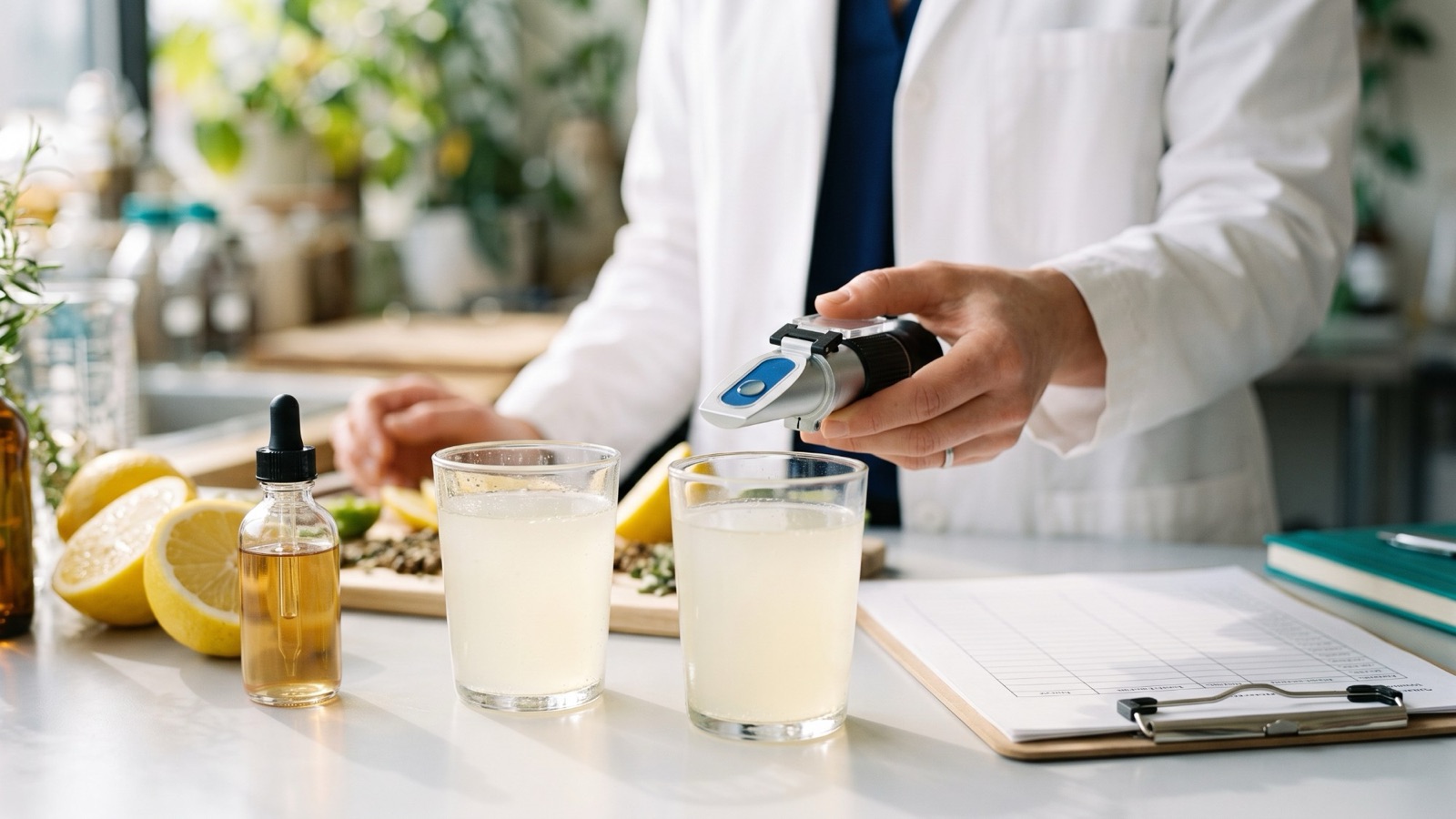

Formulation guide: quality and the line · Reviewed by the UnSugar applications team
Your reduced-sugar lemonade tastes right. Then the refractometer says 5 instead of 11, and someone in the syrup room adds sugar to "fix" it. Here is why Brix and sweetness part ways after a sugar reduction, and what to check on the line instead.
The short version
Brix measures dissolved solids, and in a sweetened drink most of those solids are sugar. UnSugar Sweet Protein replaces sugar's sweetness at milligram levels, so it barely moves the reading. When you cut sugar, Brix drops but sweetness does not. Set a new Brix spec for the reduced formula, control the sweet protein by weight in the batch record, and check sweetness by tasting against a retained standard.
What Brix actually measures
One degree Brix is roughly 1 gram of dissolved sucrose in 100 grams of solution. A refractometer reads how much a liquid bends light, and dissolved solids are what bend it. In a regular soft drink or lemonade, sugar is most of those solids, so Brix became a handy stand-in for "is this batch sweet enough?"
It was never measuring sweetness. It was measuring sugar, and sugar happened to be the sweetness. Once that link is gone, the number keeps its meaning and loses its job.
What happens to the reading after a sugar reduction
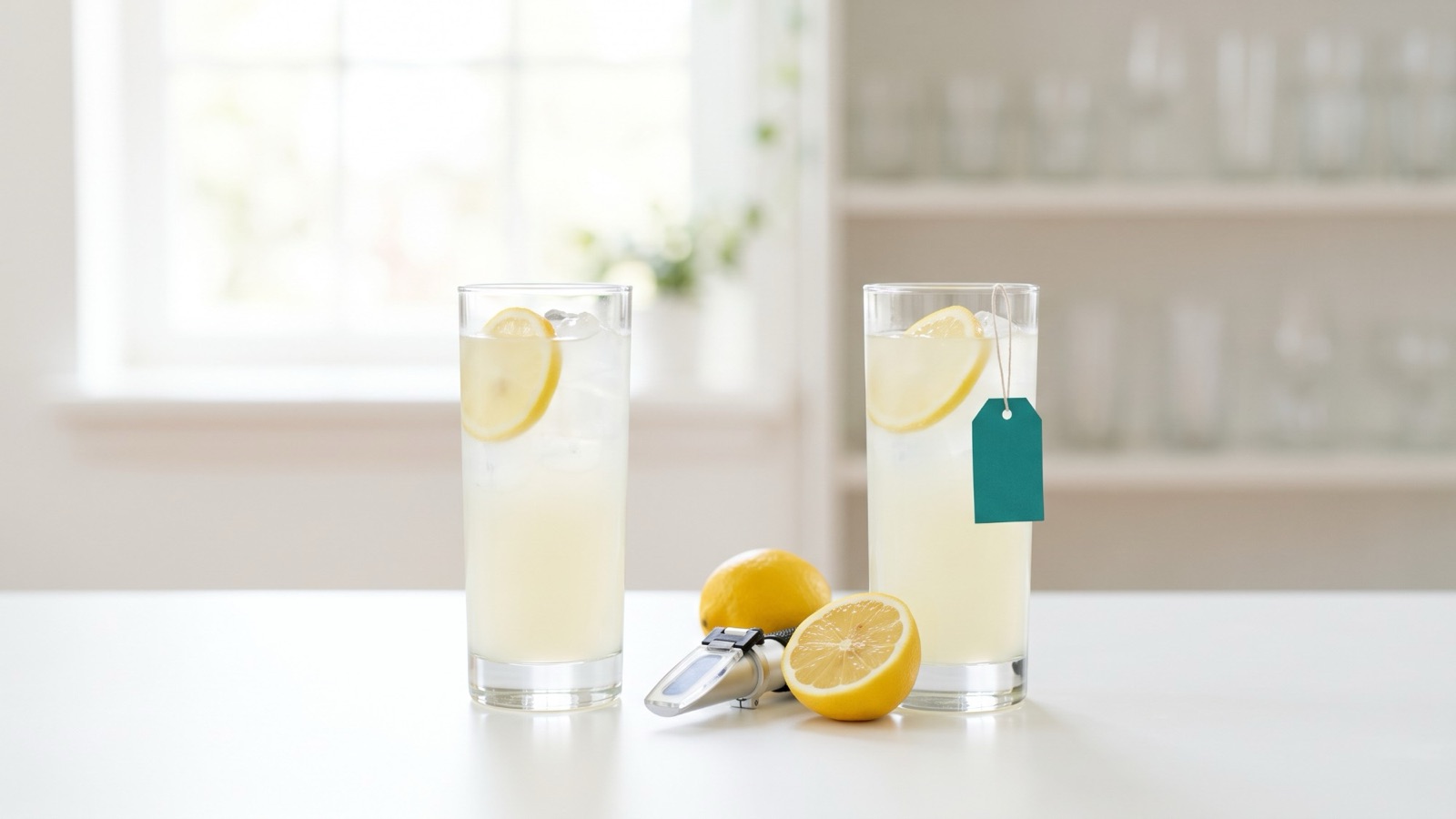
Take our classic lemonade example. The full-sugar version uses 100 g of sugar per liter and reads about 11 °Bx. The reduced version keeps 35 g of sugar and gets the other 65% of its sweetness from about 1.3 mL of UnSugar Sweet Protein liquid per liter. It reads about 5 °Bx.
Both taste equally sweet. One of them looks like a mistake on the QC sheet.
The reason is simple arithmetic. The sweet protein is 1,000 times sweeter than sugar, so the 65 g of sugar it replaced became about 65 milligrams of protein. Sixty-five grams of solids left the drink. Sixty-five milligrams came back.
Not every replacement ingredient behaves the same
This trips teams up when the sweetener system is a blend:
| Ingredient | Shows up on the refractometer? |
|---|---|
| Sugar, glucose, fructose | Yes, it is what Brix was built around |
| Allulose and other bulking sweeteners | Yes, they are dissolved solids too |
| Soluble fibers | Yes, at the grams you add for body |
| UnSugar Sweet Protein | Barely, it is used at milligram levels |
| Other high-intensity sweeteners | Barely, for the same reason |
So a blend of sweet protein, a little sugar and some allulose lands somewhere between the old reading and a water-like one. The exact number depends on your formula, which is why it has to be measured, not guessed.
Four risks if nobody updates the spec
- Good batches get rejected. The reading is "out of spec" even though the product is right.
- Someone adds sugar to hit the old number. Now you have a reduced-sugar label on a product that is not.
- Dilution errors go unseen. Brix was also your check on the syrup-to-water ratio. With a new target, it still is. With the old target, it is noise.
- The Brix to acid ratio stops meaning "balanced." If your team uses that ratio as a taste guide, the old target will push you toward the wrong acid level.
What to check on the line instead

None of this means throwing out the refractometer. It means giving it a new job and adding a taste check.
Set a new Brix spec. Measure Brix on your approved pilot batches of the reduced formula and set the target and tolerance from those. Brix now checks the sugar and bulking ingredients you kept and your dilution ratio, which is still worth checking.
Control the sweet protein by weight, not by reading. At milligram levels it will not show on a refractometer, so control it where it enters: a calibrated scale or volume dose, written in the batch record, with the vessel rinsed into the batch. Dose the liquid into a few liters of batch water first, then into the mixing tank. Never dose a concentrate by drops.
Add a short sensory release. Keep a retained standard from an approved batch. Before release, two or three trained tasters compare the new batch with the standard, blind. You are asking one question: "Is this the same?"
Keep pH and acidity as they are. Those checks do not depend on sugar and still mean what they always meant.
Write it all into the spec sheet and tell your co-packer. Most Brix trouble starts at handover, when a plant runs the new formula against the old sheet.
Three habits from our applications team

- Taste after a rest. Let every trial stand about 15 minutes before anyone tastes it, and taste every sample the same way.
- Ask two questions, not one. "How sweet is it?" and "Do you like it?" give different answers. Keep them apart on the score sheet.
- Change one thing at a time. If sweetness drifts, check the dose and the mixing first. Most uneven-sweetness complaints trace back to how the dose was mixed in, not how much went in.
The same new-spec thinking applies when you are cutting sugar in a carbonated soft drink, and the beverage sugar reduction playbook walks through the wider project.

Set the new Brix target with our team
Send us your formula and current spec sheet and our applications team will help you set the new Brix target and a simple sensory release check. Or request free samples to run the numbers on your own bench.
Quick answers
Why does Brix drop when I reduce sugar? Brix measures dissolved solids, and sugar was most of them. A sweet protein replaces sugar's sweetness at milligram levels, so the solids leave the drink and the reading falls, while the sweetness stays.
Can I still use Brix for a reduced-sugar drink? Yes, with a new target. Measure Brix on approved batches of the reduced formula and use it to check the sugar you kept and your dilution ratio. Do not use it to judge sweetness.
How do I check sweetness on the line without Brix? Control the sweet protein by weight or volume in the batch record, and add a quick blind comparison against a retained standard before release.
Does allulose show up in a Brix reading? Yes. Allulose and soluble fibers are dissolved solids, so a blend that uses them reads higher than one that uses only a sweet protein. Measure your own formula.
How much does Brix drop in a typical reduced-sugar lemonade? In our lemonade example, a 65% sugar swap took the reading from about 11 °Bx to about 5 °Bx with no change in sweetness. Your number depends on what else is in the formula.
About UnSugar
UnSugar Sweet Protein is a sweet-protein ingredient that helps US food and beverage teams cut sugar while keeping the taste. It is 1,000 times sweeter than sugar and replaces 60 to 90% of the sugar in suitable formulations. UnSugar Sweet Protein is self-affirmed GRAS for its intended use in food and beverage, and a GRAS Notice has been submitted to the U.S. FDA and assigned GRN 1338, with the no-questions response awaited. Contact sales@goUnSugar.com.
Figures are from our bench examples and are formulation targets, confirmed by testing in your own product. Quality specifications are your own team's decision. Labeling depends on the finished formulation and applicable regulations; confirm on-pack wording with your regulatory team. We make no health, glycemic or calorie claims for UnSugar Sweet Protein.
Want to taste it in your product?
Request samples and the technical spec, and our team will help you plan the evaluation.
Request Samples →