
Sweet like sugar. Smart like a protein.
UnSugar Sweet Protein is a plant-based sweet protein, the kind of sweetness found in fruit. It reads as clean, sugar-like sweetness, works at roughly one part per 1,000 of the sugar it replaces, and plays best inside the sweetener system you already use. Here is everything a formulator checks before asking for a kit.
A plant-based sweet protein.
Some fruits make proteins that taste intensely sweet. UnSugar is a plant-based sweet protein of that very kind, so the sweetness comes from nature. No sugar, no sugar alcohols, just a clean sweetness that behaves. It is GMO-free.
On the tongue it is rounded and sugar-like, with a gentle, clean finish rather than the bitter or licorice tail of stevia or monk fruit.
What it brings to your product.
Zero added sugar, intense sweetness at a tiny dose, and stability through heat and acidity.
What matters when you formulate with it.
Sweet like sugar. Digested like a protein.
One part for every thousand.
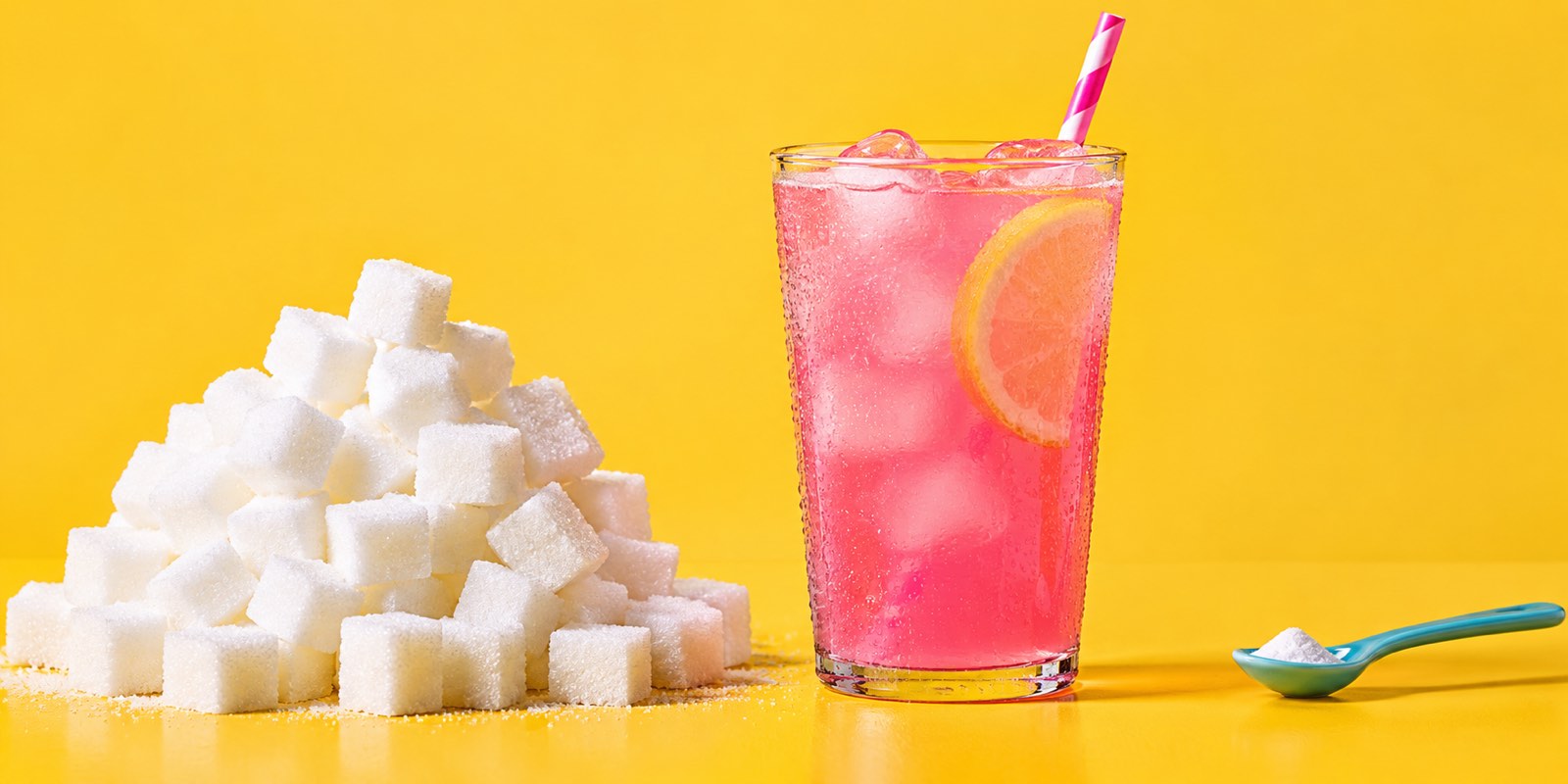
A working convention: because we start at about 1,000 times sweeter than sugar, the use rate is roughly one part UnSugar for every 1,000 parts of the sugar it replaces. This is a starting point for beverages and dairy; expect to adjust by about 20% by taste, and more in very sweet or fatty systems. So it adds taste, not bulk. Worked examples are benchmarked against a 5% sugar solution.
Two simple formats.
A sample kit comes two ways, a liquid sample bottle and sample powder. A little goes a long way in both.
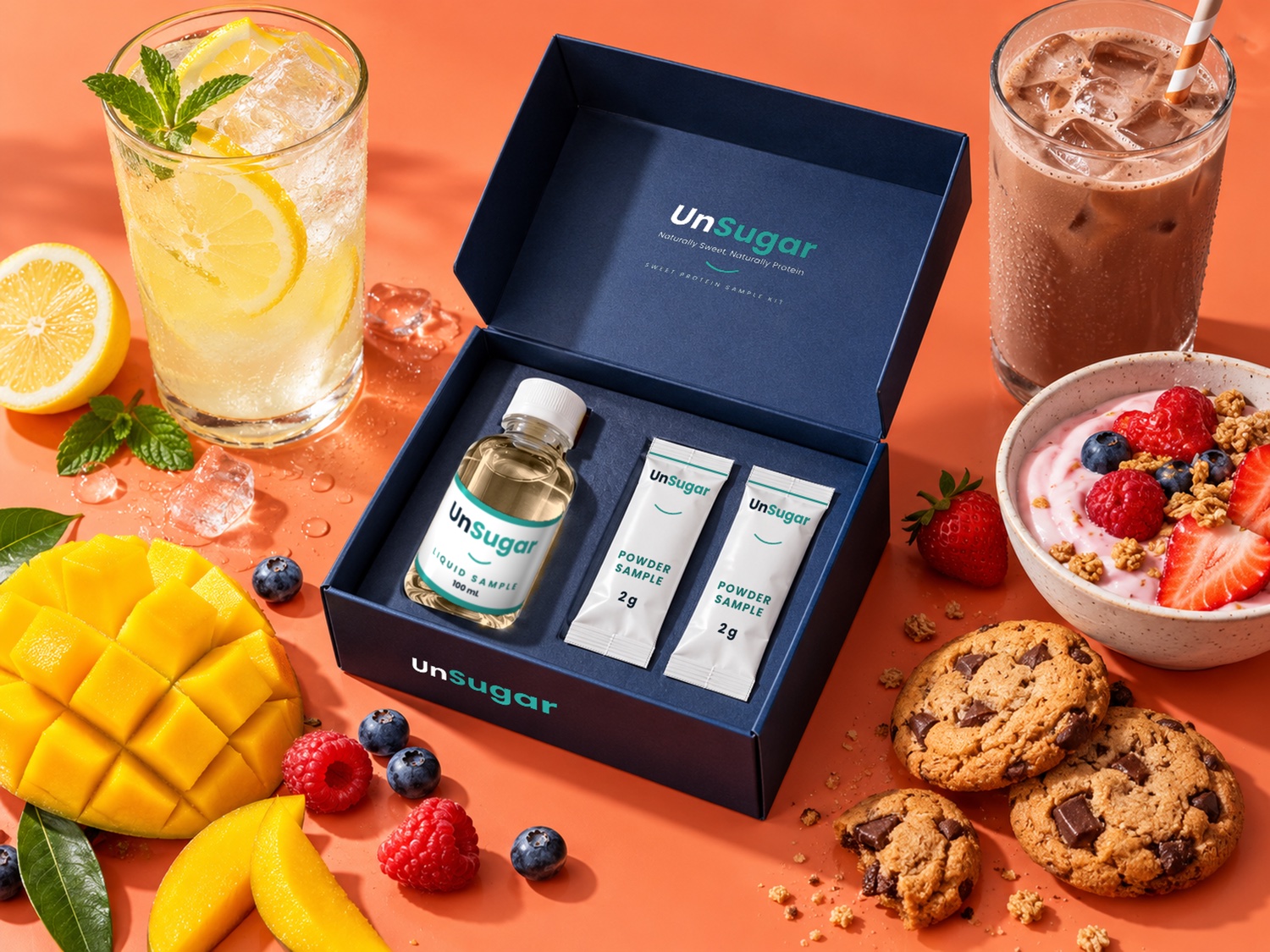
Sample bottle (liquid)
- Format: 100 mL liquid sample
- Sweetening power: 5 grams of sweet protein in the bottle is enough to replace up to about 5 kilograms of sugar.
- Dosing: A tiny amount carries the sweetness of a lot of sugar, so you dose it in drops, not spoons.
- Best for: Beverages, dairy drinks and any water-based system.
Sample powder
- Format: 1 g, 2 g and 10 g packets
- Sweetening power: 1 gram of the sample powder is enough to replace up to about 1 kilogram of sugar.
- Dosing: A pinch replaces a lot of sugar, so a little goes a very long way.
- Best for: Dry blends, bakery, confectionery and premixes.
You dose it in tiny amounts, so a little goes a long way. Your applications team helps you dial in the exact amount for your product.
The best result is a blend.
The strongest results come from a blend. Our usual starting split is to take about 65% of the sweetness from UnSugar Sweet Protein and keep about 35% from the sweetener you already use, whether that is sugar, sucralose or stevia. The result is a better product, not simply sugar taken out.
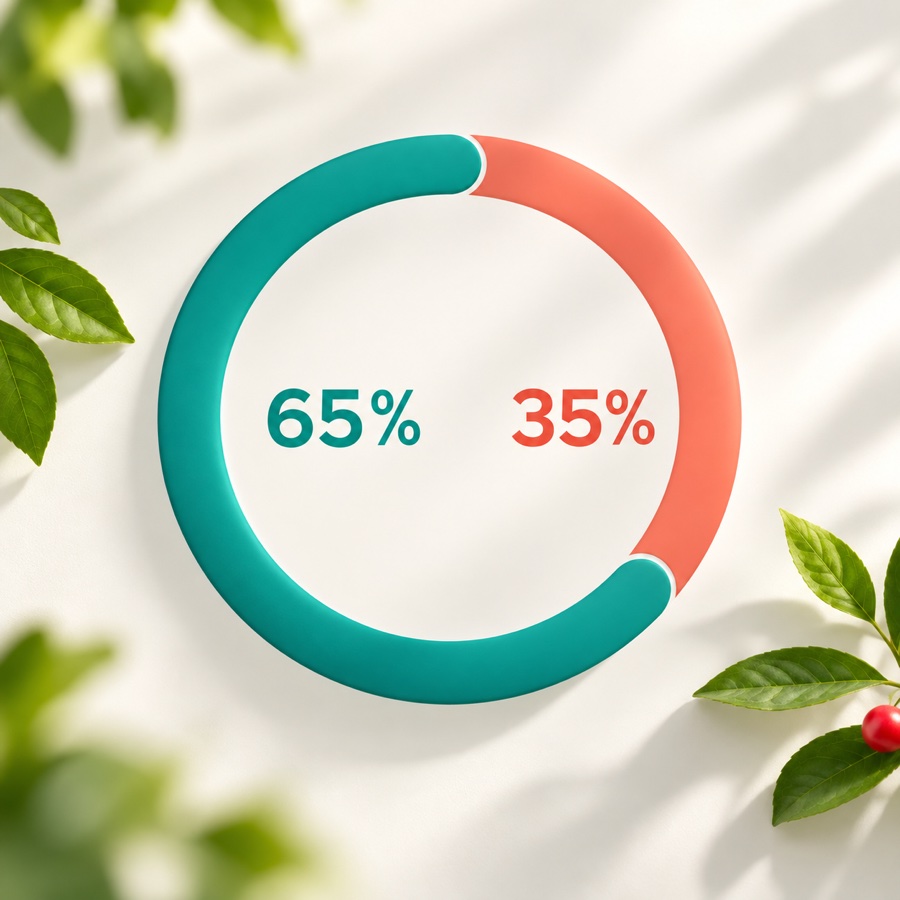
65% from the sweet protein, 35% from your existing sweetener. The easiest place to start is a stevia or sucralose drop-in, because the bulk those systems provide is already solved.
UnSugar Sweet Protein can help take 60 to 90% of the sugar out of suitable formulations while rounding out the off-notes associated with stevia and monk fruit. Depending on the product and the target, UnSugar can support sugar reduction from about 20 to 90%. These figures are formulation targets our applications team works to, confirmed in your own product by bench testing.
Matrix, heat and pH, in plain terms.
Water-loving and easy to disperse. A few systems just want a little care, and none of it is a safety concern. It is all about an even, consistent taste.
It is hydrophilic, so it performs well in water-based systems and in dry powder systems. In dry blends, mix it up in steps (about 1 kg into 10 kg, then into the full batch) so it spreads evenly. No water is needed, which suits chocolate, protein powders, premixes, seasonings and cream bases.
In fatty, low-water systems such as chocolate, cream and fat fillings it can sit in patches, so some bites taste very sweet and others do not. Carry it in through a dry or water-containing phase, or use an emulsifier such as lecithin, to spread it evenly.
Supplied at about pH 4.0 on the certificate of analysis. In the published literature the sweet protein holds its sweetness across roughly pH 2.5 to 10; our own low-pH storage work is in progress and available under NDA. Alcohol and vinegar both lift perceived sweetness, so start those applications at about half the calculated dose and adjust up by taste.
It holds its sweetness up to about 98°C, so it comes through normal cooking and processing. It holds its sweetness through normal cooking and processing, up to about 98°C. Only very long, very high heat in dry products softens the taste, so moist cakes, pasteurized drinks, sauces and jams are comfortably in range. Tell us your process and we will advise.
Simple to store, easy to dose.
Good storage keeps the dosing math honest, especially the powder, which loves to drink in moisture.
Refrigerate the sample bottle for longer shelf life, especially once it is opened.
Keep the sample powder sealed and dry. It draws in moisture, and absorbed moisture makes it weigh heavy and quietly throws off the dosing math, so let a packet reach room temperature before opening. Replace any powder that has gone lumpy or sticky rather than trying to dry it out.
The finished product needs no special conditions. We hold 12 months of ambient storage data on the powder at 25°C; a formal shelf-life study is in progress.
Judge cost the way the formula uses it.
Because the use rate is roughly one part per 1,000 of the sugar replaced, price per kilogram tells you almost nothing. The number that matters is cost to sweeten a serving, on a sugar-equivalent basis. Volumes and pricing move with scale, so rather than print a figure that goes stale, we point you to a live quote and lead time for your volume. Just ask.
Straight answers.
The stuff every team asks us in the first ten minutes.
What are we tasting?
UnSugar Sweet Protein is a plant-based sweet protein, the kind of sweetness found in fruit. Your taste buds read it as clean, sugar-like sweetness, and because it is 500 to 2,000 times sweeter than sugar, a tiny pinch carries the sweetness of a whole lot of sugar.
Is it a sugar or a carbohydrate?
Neither. It is a protein, not a sugar or a carbohydrate, and it is used at milligram levels, so it adds no sugars at typical use. For how that reads on the nutrition label, see the science page.
Is it a straight swap for sugar?
No, and no honest ingredient is. Sugar also brings bulk, texture and browning, so the sweet protein takes over the sweetness cleanly and the rest of the recipe rebuilds what the product still needs. That is exactly why the best results come from a blend.
Does it get along with stevia and monk fruit?
That is the whole idea. It slots into the sweetener system you already use, and in our applications work, and consistent with published sensory studies, adding the sweet protein to a stevia or monk fruit system reduces the perceived bitter and lingering finish. A good starting point is about 65% of the sweetness from UnSugar and 35% from what you already run.
Will the oven ruin it?
Usually not. It holds its sweetness up to about 98°C, so it comes through normal cooking and processing. High-moisture products such as cakes, pasteurized drinks, sauces and jams are fine, because water holds the core near 80 to 85°C whatever the oven is set to. The cases to watch are biscuits, crackers, extruded snacks and high-temperature spray drying. We are developing a format for long, dry, high-temperature processes. Tell us your temperature, time and moisture and we will advise.
How should we compare the cost?
At the real use level, on a sugar-equivalent or per-serving basis, never by price per kilogram. The use rate is roughly one part per 1,000 of the sugar it replaces, so a big price-per-kilogram number turns into a tiny cost-in-use. Ask us for a live quote and lead time for your volume.
How do I get my hands on it?
Tell us what you are building and we will send a sample kit to your bench, with a sample bottle, sample powder and simple dosing math. Free to qualified food and beverage teams.
Put a sample kit on your bench.
Tell us what you are building and we will recommend the right sample format and a starting blend for your category. Free to qualified food and beverage teams.