
Sweet protein vs monk fruit: two high-intensity approaches.
Monk fruit is a familiar plant-derived sweetener used in many reduced-sugar products. Sweet proteins can offer a complementary sweetness profile and a different ingredient story. The right choice depends on taste, cost-in-use, labeling, supply and application performance.
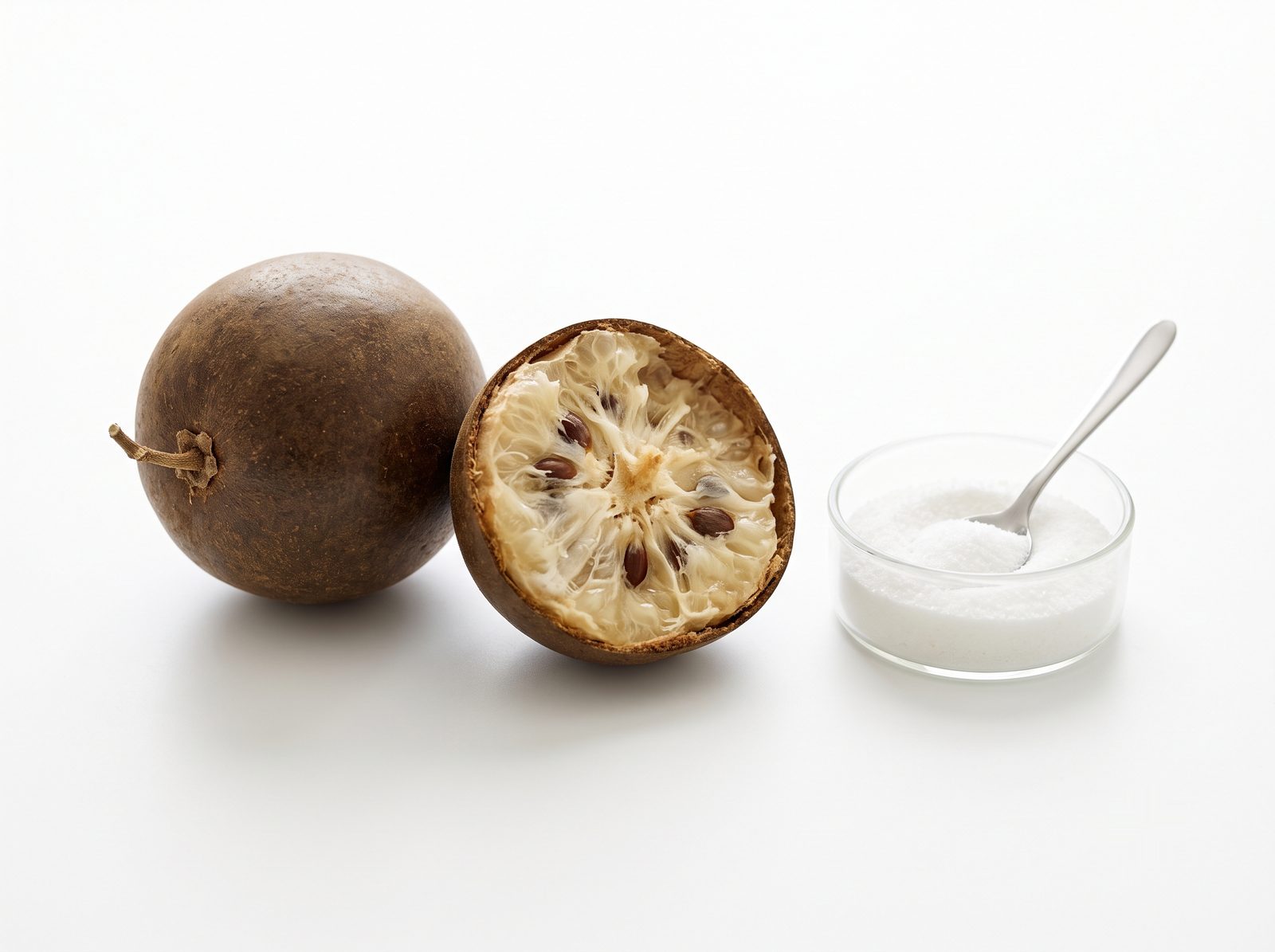
Monk fruit
- Source: Mogrosides extracted from the fruit
- Sweetness: 150 to 250 times sugar
- Finish: Can linger, faint fruity or licorice note
- Supply: Concentrated growing region
Sweet protein
- Source: A sweet protein, plant-based
- Sweetness: 500 to 2,000× sugar
- Finish: Clean; helps mask others’ off-notes
- Supply: Not tied to a harvest or region
Two routes to the same receptor
Monk fruit sweetness comes from mogrosides, sweet compounds extracted from the fruit. UnSugar's comes from a protein. Both are high-intensity, both are used well below sugar levels, and both are recognized on label as non-artificial options. From a shopper's point of view they occupy similar territory, which is exactly why the choice between them is a technical and commercial decision rather than a marketing one.
Where they differ for a formulator
Monk fruit brings a clean reputation but can carry a lingering sweetness and a faint fruity or licorice character at higher levels, and its supply chain is concentrated in a single growing region, which is a risk worth pricing into a long-range plan. A sweet protein is used at even lower levels, carries a protein-based story rather than a botanical-extract one, is plant-based, not farmed so it is not exposed to weather or harvest, and can help clean up the finish of the system it joins rather than adding a note of its own.
The practical answer
The strongest system may use one ingredient, both, or a broader blend that also includes stevia, allulose or fibers. UnSugar's role is to help your team evaluate the complete sensory and commercial result rather than to win an argument about ingredients. Bring the real product, not the ideology, and let the taste scores and the cost-in-use model decide.
| Attribute | Sugar | Stevia / Monk fruit | UnSugar |
|---|---|---|---|
| Taste | Clean | Bitter or lingering | Clean, sugar-like |
| Contributes sugars or carbohydrate | Yes | No | No (a protein) |
| Used as | Bulk carbohydrate | High-intensity sweetener | High-intensity sweet protein |
| Sweetness vs sugar | 1x | 200 to 350x | 500 to 2,000x |
| Works with other sweeteners | Yes | Yes | Yes, and rounds out their off-notes |
| Replaces sugar's bulk | Yes | No | No |
| Cost-in-use | Low | Premium | Judged on a sugar-equivalent basis at the real use level; ask for a live quote |
Directional comparison for evaluation planning. These figures are formulation targets our applications team works to, confirmed in your own product by bench testing.
The supply-chain difference that rarely makes the taste test
Taste tests happen in a single afternoon; supply decisions play out over years, and this is where the two ingredients quietly diverge. Monk fruit is an agricultural product, grown at scale in a concentrated region, and therefore exposed to weather, crop yield, harvest timing and the geopolitics of a single origin. A plant-based sweet protein has a steady, consistent supply set by production planning rather than by the seasons. For a brand committing to a reformulation it intends to keep on shelf for a decade, that predictability, of price, of quality and of availability, is not a footnote. It is often the argument that decides which ingredient anchors the system, even when both pass the panel.
Choosing between them, in practice
If monk fruit is already working in your product and supply is not a concern, there may be no reason to change the anchor, and UnSugar's role becomes lifting the finish so you can cut further. If you are formulating from a blank sheet, or if single-origin supply risk worries your procurement team, a sweet protein makes a strong primary sweetness with monk fruit as an optional supporting note. Either way, the decision should come from your own bench data and your own commercial model, and our applications team is set up to help you generate both rather than to push a predetermined answer.
It is also worth retiring the framing of this as a contest. In practice the most robust reduced-sugar systems tend to be blends, because each sweetness source covers for the others' weaknesses: monk fruit brings a rounded body, a sweet protein brings clean intensity and masking, and a bulking agent handles what neither can. Choosing an anchor is really choosing where to start, not declaring a winner, and the ingredient that anchors a beverage may play a supporting role in the same brand's bakery line. Keeping the goal, the best finished product, ahead of any loyalty to a single ingredient is what separates teams that ship reformulations from teams that keep re-running the same taste test. Our applications team is built to help you find that combination rather than to defend a single answer, which is why the conversation usually starts with your recipe and your target, not with a spec sheet for one ingredient.
Let the taste scores decide, on your bench.
Tell us what you’re building. We’ll send a sample kit, the sample bottle and sample powder, and help you plan the first bench trial.
The questions teams ask us first.
Can UnSugar and monk fruit be used together?+
Yes. They can be evaluated together as part of a sweetener system, with the blend tuned to your target profile and cost.
Which is better on label?+
Both are positioned as non-artificial options. The right label strategy depends on your category, claim objective and regulatory review.
How do we compare the two on cost?+
Compare at the actual use level on a sugar-equivalent or serving basis. Price per kilogram is misleading for any high-intensity ingredient.