
Sweet protein vs sugar: different tools, different jobs.
Sugar is more than a sweetener. It also provides bulk, solids, texture, browning, preservation and process functionality. Sweet proteins contribute intense sweetness at very low use levels, so they can help reduce sugar, but they do not replace every function sugar performs.
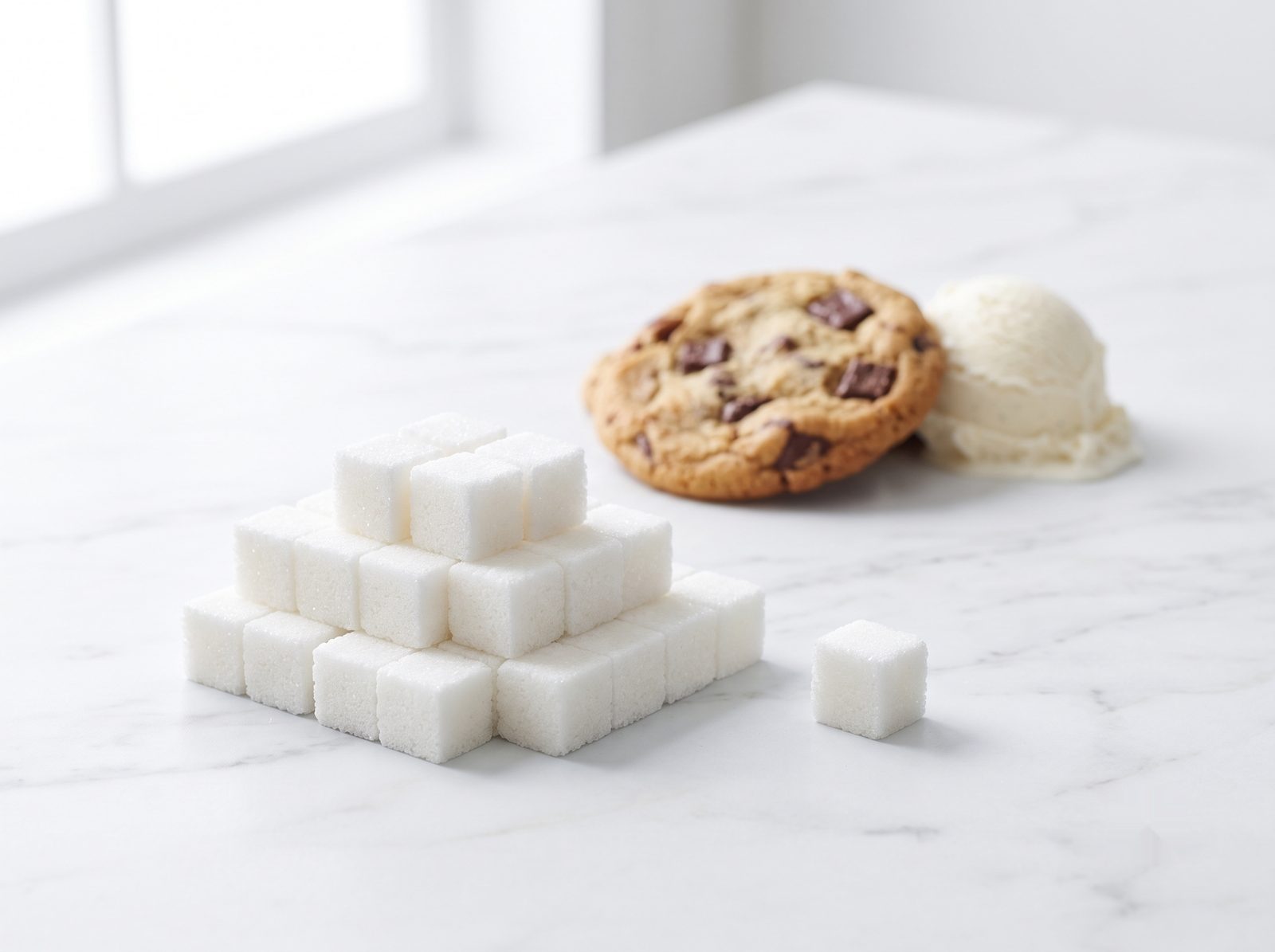
The job a sweet protein can take over directly.
Rebuilt with fibers, sugar alcohols or allulose.
The browning that gives baked goods their crust and color.
Crumb, chew, spread and viscosity.
Keeps frozen desserts smooth and scoopable.
Lowers water activity to extend shelf life.
What sugar is actually doing
Before you can replace sugar you have to know what it was for, and the honest answer is usually more than one thing. In a soda it is close to pure sweetness plus a little body, which is why beverages are the friendliest category for a sweet protein: cut the sweetness problem and you have cut most of the problem. In a cookie sugar is sweetness, spread, browning, moisture retention and shelf life all at once. In an ice cream it is all of that plus controlling how much ice forms as the product freezes. Same ingredient, five different jobs, and only one of them is sweetness.
The comparison
| Attribute | Sugar | Stevia / Monk fruit | UnSugar |
|---|---|---|---|
| Taste | Clean | Bitter or lingering | Clean, sugar-like |
| Contributes sugars or carbohydrate | Yes | No | No (a protein) |
| Used as | Bulk carbohydrate | High-intensity sweetener | High-intensity sweet protein |
| Sweetness vs sugar | 1x | 200 to 350x | 500 to 2,000x |
| Works with other sweeteners | Yes | Yes | Yes, and rounds out their off-notes |
| Replaces sugar's bulk | Yes | No | No |
| Cost-in-use | Low | Premium | Judged on a sugar-equivalent basis at the real use level; ask for a live quote |
Directional comparison for evaluation planning. These figures are formulation targets our applications team works to, confirmed in your own product by bench testing.
How to plan the gap
Map the jobs, then assign each one to something. Sweetness goes to UnSugar, alone or alongside the high-intensity sweetener you already run. Bulk goes to fibers, sugar alcohols or allulose. Browning, moisture and structure each get their own answer. The projects that stall are almost always the ones that swapped the sweetness and quietly hoped the rest would hold; the projects that ship are the ones that treated the reduction as a system redesign from the start.
How far the cut can go
How much sugar you can remove is a function of how much of sugar's work was structural in the first place. Sweetness-led products can go a long way. Structure-led products can still improve meaningfully, but the deeper the cut, the more of the formula moves with it.
Why the category order is not arbitrary
Notice that the categories line up almost exactly with how much of sugar's work was structural. In a beverage, sugar is close to pure sweetness, so a high-intensity sweetener can take over most of the job and the reductions run deep. In dairy, sugar shares the stage with cultured notes and mouthfeel, so the achievable cut is real but more moderate. In bakery and confectionery, sugar is the body of the product, feeding browning, spread, crumb and shelf life, so a sweet protein handles the sweetness while a wider rebuild handles everything else, and the headline reduction is smaller because more of the formula is doing structural work. Reading this pattern before you start tells you roughly how much engineering a target implies, which is exactly the kind of expectation-setting that keeps a project on schedule.
The cost conversation this reframes
Because sugar is cheap by the kilo, every reduced-sugar project eventually meets a cost question. The mistake is to compare the sweet protein's price per kilogram against sugar's, which is meaningless when one is dosed in grams and the other in milligrams. The right comparison is cost to deliver a unit of sweetness in the finished product, and against that yardstick a high-intensity ingredient looks very different. Layer in the bulking agents a deep cut requires, and the honest model is total formulated cost-in-use at the target reduction, which is the number a procurement team should actually be evaluating. It is also the number that improves as a plant-based ingredient scales, since its cost curve is set by process efficiency rather than by farmland, weather or the commodity price of a crop. Sugar, by contrast, is a mature commodity whose price can only really go up over the long run as land and climate pressures mount, which quietly strengthens the case for a high-intensity alternative the further out you plan.
Map the gap on your own bench.
Tell us what you’re building. We’ll send a sample kit, the sample bottle and sample powder, and help you plan the first bench trial.
The questions teams ask us first.
How much sugar can a sweet protein remove?+
It is product specific. UnSugar Sweet Protein can help take 60 to 90% of the sugar out of suitable formulations while rounding out the off-notes associated with stevia and monk fruit. These figures are formulation targets our applications team works to, confirmed in your own product by bench testing.
Will the product still brown in the oven?+
Not from the sweet protein. Browning comes from sugars reacting with proteins under heat, so a reduced-sugar bake usually needs a browning strategy of its own.
Is sweet protein cheaper than sugar?+
Compare on a sugar-equivalent, cost-in-use basis rather than price per kilogram. UnSugar is judged on a sugar-equivalent basis at the real use level; ask for a live quote.