
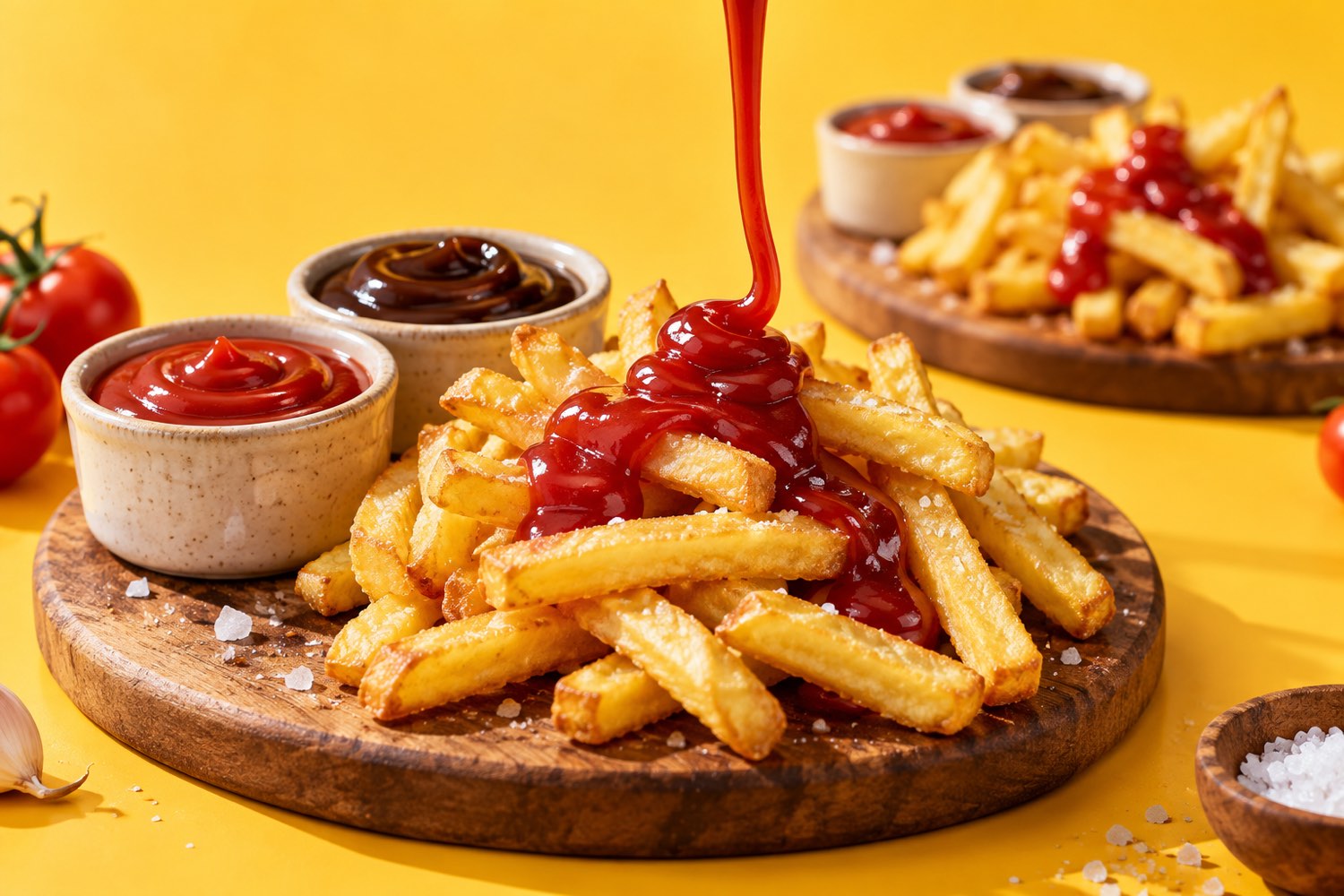
Address hidden sugar without losing flavor balance.
In sauces and condiments, sweetness often balances acid, salt, heat, smoke, tomato, fruit or savory notes. Reducing sugar changes the entire flavor system. UnSugar can contribute sweetness while the formulation rebuilds body, gloss and balance.
Hidden sugar is the story shoppers keep finding.
People are surprised how much sugar hides in ketchup, barbecue sauce and dressings, and a visibly lower sugar line is a real point of difference on a crowded shelf.
Reduction depends on the product and requirements, and every number should be confirmed by bench testing in your own recipe.
Where the sweet protein fits.
In a sauce, sweetness offsets acid, salt and heat. UnSugar supplies it cleanly.
Sugar solids add cling and thickness that has to be rebuilt when they leave.
The glossy look of a glaze or ketchup partly comes from dissolved sugar.
In some formats sugar aids preservation by lowering water activity.
What this does for your brand, not just your batch.
A lower sugar line on a savory product is an unexpected, visible differentiator. Confirm any on-pack wording with your regulatory review.
A clean sweetness that holds the sweet, savory and sour balance, so the sauce still tastes like the one already on the table.
A sweet protein, digested like other dietary proteins and used at milligram levels, so it adds no sugars. Full safety and regulatory documentation is ready for your quality and regulatory teams.
Most sauces land around 40 to 60%, tuned against the acid and salt already in the recipe.
A good starting blend takes about 65% of the sweetness from the sweet protein and keeps about 35% from the sweetener you already use.
A worked dose you can follow.
Here is how the dose lands in a real formula, from your sugar target to the amount you actually weigh out.
A little goes a long way. UnSugar is 500 to 2,000 times sweeter than sugar, so you dose it in tiny amounts. Your applications team helps you dial in the exact amount for your product.
Take a ketchup at 200 grams of sugar per kilogram and aim to replace 60%. That is 120 grams of sugar sweetness, which on the working-solution basis calculates to 120 mL per kilogram.
Then halve your starting dose. Vinegar lifts perceived sweetness, so start at about half the calculated dose, roughly 60 mL, and adjust up by taste. Keep enough sugar for body and gloss, rest 15 minutes, then taste against the reference.
Heat and finish. A moist, hot-filled sauce is heat-safe, because the water protects the sweet protein. If the sweetness runs on a little long, the acid already in the sauce is your friend: a small lift of about 10% cleans it up.
These figures are formulation targets our applications team works to, confirmed in your own product by bench testing.
Heat, pH and the levers to watch.
| What to plan around | UnSugar in sauces and dressings |
|---|---|
| Typical sugar reduction | 60 to 90% in suitable systems |
| Vinegar | Lifts sweetness; start at about half the calculated dose and adjust up |
| Key interaction | Acid, salt and savory balance |
| Must be rebuilt | Body, viscosity, gloss, water activity where relevant |
| Heat | Moist, so hot-filled sauces are fine |
| Use level | Provided in the current technical data sheet. |
| Pairs with | Stevia, monk fruit, fibers, thickeners |
The bar is simple: the balance still tastes right.
We formulate to a reduced-sugar sauce or dressing that holds its own against your full-sugar control. Sweetness here balances acid, salt and heat, so we lead with the sweet protein, rebuild body and gloss, and confirm every number by bench testing in your own recipe.
A balance problem wearing a sweetness label
Sauces and dressings hide more sugar than almost any other aisle, and reducing it is less a sweetness challenge than a balance one. In a ketchup, sugar is holding tomato acidity in check. In a barbecue sauce, it is balancing vinegar, smoke and salt. In a dressing, it is rounding sharp acids into something palatable. Pull the sugar out and you are not just making the product less sweet; you are unbalancing an entire flavor system that was tuned around it. That is why a thoughtless cut produces sauces that taste harsh, thin or sour, and why the sweetness system has to be designed against the acid and salt profile rather than dosed to a number.
The functional gaps sugar leaves behind
Beyond flavor balance, sugar contributes physical properties a sauce relies on. Its dissolved solids add body, cling and the viscosity that lets a dressing coat a leaf or a glaze coat a wing. That gloss and sheen consumers read as quality is partly the optics of a high-solids liquid. And in some shelf-stable formats, sugar is quietly helping preserve the product by lowering water activity. A reformulation has to account for each of these with thickeners, gums, fibers or an adjusted process, because none of them come back on their own when you swap in a high-intensity sweetener. The upside is that the toolkit for rebuilding body and gloss is mature and familiar to any sauce developer; the work is in retuning the balance, not inventing new chemistry.
How UnSugar fits
Within that rebuild, UnSugar provides a clean sweetness at very low use levels and, importantly, does not add off-notes of its own to a savoury system that has nowhere to hide them. It can help mask the bitterness of the stevia or monk fruit a team may already use, letting the sugar come down further while the acid-salt-sweet balance stays intact. Because the interactions are so recipe-specific, sauces reward bench work: small, deliberate steps, tasted against the reference product, until the balance holds at the target reduction.
The label upside that makes the work worthwhile
Sauces and condiments are where reduced-sugar claims carry surprising weight, because shoppers are increasingly aware that these products hide sugar they did not expect. A ketchup or a barbecue sauce that can credibly carry a no-added-sugar or reduced-sugar flag stands out in an aisle where most competitors cannot, and the added-sugars line on the panel, which regulators and retailers now watch closely, moves down by the full amount removed when a high-intensity sweetener does the sweetening. That combination, a differentiating front-of-pack claim plus a cleaner nutrition panel, is often what justifies the formulation effort a good sauce reduction requires. As always, the specific on-pack wording belongs to your regulatory review, and we supply the ingredient documentation that review needs rather than approving claims ourselves.
Tell us the format, the current sweetener system and the reduction target. We will come back with the most useful first evaluation step.
Product types in this category.
Sauces are a balance problem more than a sweetness problem. UnSugar is evaluated as the sweetness contribution inside a system that also has to hold acidity, body and gloss together once the sugar solids come out.
What we need from you.
Sauce type, current sugar and acid levels, target reduction, viscosity and gloss expectations, process and shelf-life requirements, and label objective.
Straight answers.
Will a reduced-sugar ketchup still taste balanced?
That is the whole challenge. Sugar is balancing tomato acidity, so the sweetness system has to be designed against the acid profile, not just dosed to a sweetness number.
Does removing sugar affect shelf life?
It can, because sugar contributes to water-activity control in some formats. Preservation strategy should be reviewed as part of the reformulation.
Can UnSugar be used in a hot-filled sauce?
Process suitability is confirmed from the current technical data sheet and bench evaluation in your own recipe.
Sauces & Dressings recipes to start from.
Reduced-sugar starter formulations in this category, each with the blend and a worked dosing example.
Keep going.
The product
What UnSugar is, the UnSugar System, and how teams evaluate it.
The science
What a sweet protein is and how it creates sweetness at low use levels.
Regulatory & safety
Our status stated precisely, and the documentation your QA team needs.
Sweet protein vs stevia
Why the two are often better together than apart.
Tell us what you’re building.
Share your category, current sweetener system and sugar-reduction goal. We’ll send a sample kit to your bench and help you run the first trial.