
Why a protein sweetener changes the label.
Sugar is a carbohydrate used in grams. A sweet protein is a protein used in milligrams. That one difference changes the use level, what lands on the nutrition panel, and how the body handles the ingredient.
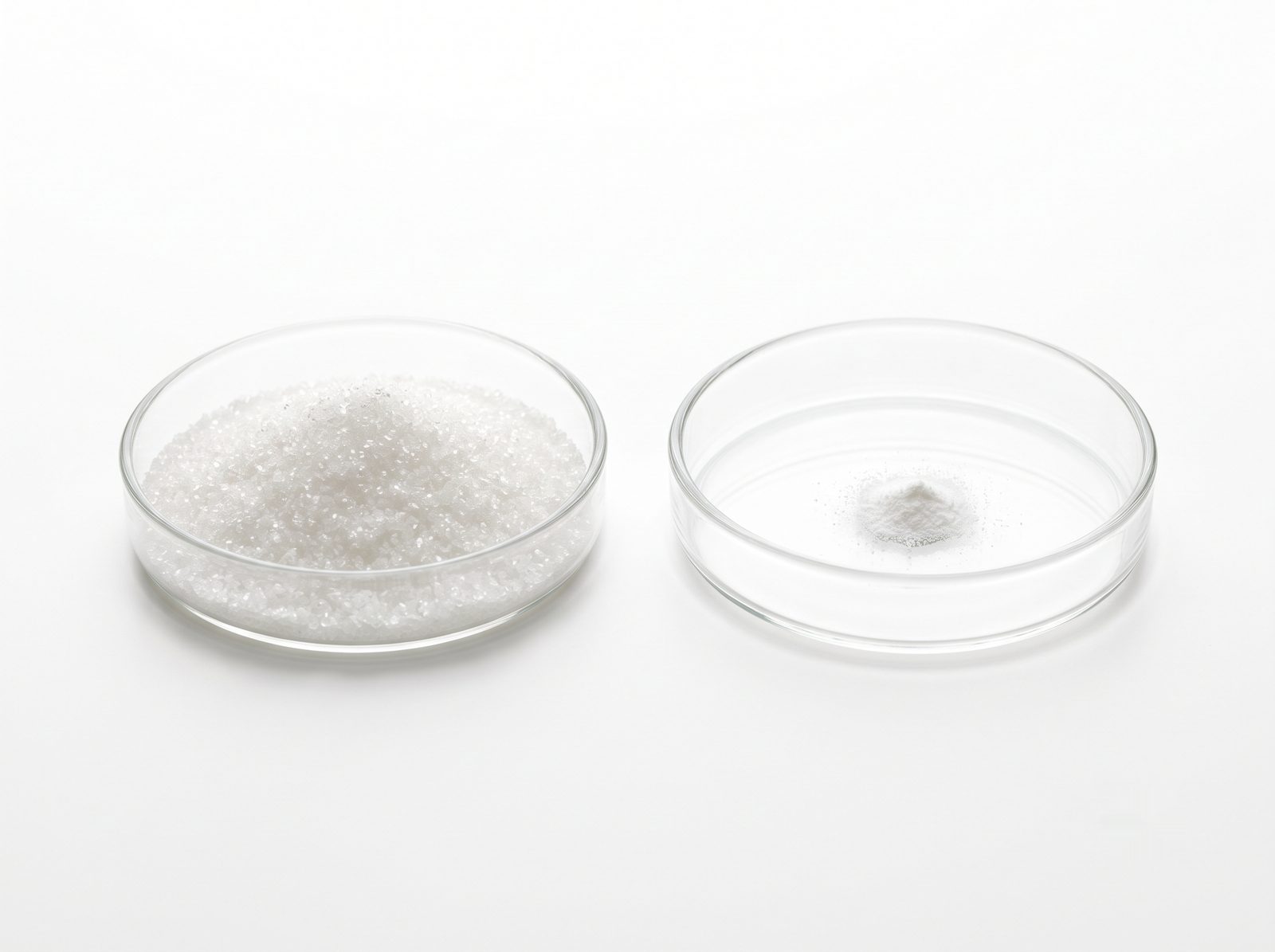
Sugar is dosed in grams because it has to carry bulk as well as taste. A sweet protein is dosed in milligrams because all it carries is taste. That roughly thousand-fold difference in mass is the root of almost everything that makes the two ingredients behave differently.
The same taste, a different molecule
Both sugar and a sweet protein end up at the same receptor, which is why both read as sweet. What happens next is not the same. Table sugar is a carbohydrate, digested as one, and it arrives in grams because it has to carry bulk as well as taste. A sweet protein carries only taste, so it works at a tiny dose. The tongue cannot tell the difference; the rest of the body, and the nutrition panel, can, and that gap is the whole reason this distinction is worth a page of its own.
What that changes in practice
- Use level. Milligrams instead of grams, which is what makes cost-in-use a very different calculation from price per kilogram.
- The panel. At the levels used for sweetness, the ingredient contributes negligible calories and no meaningful carbohydrate.
- The story. Sweet like sugar. Digested like a protein. Brazzein is a protein, not a carbohydrate: it is digested like other dietary proteins and, at the milligram levels used for sweetness, contributes no sugars and negligible calories. We make no glycemic, metabolic or health claims for UnSugar; any finished-product claim is for your regulatory review.
- The structure. Because it is not bulk, it does not do sugar's structural work, which the rest of the formula must cover.

Why the body handles it differently
Because it is a protein present in milligram amounts, a sweet protein is digested along the ordinary protein pathway rather than absorbed as a sugar. At milligram use levels it contributes no sugars and negligible calories. This is a genuine point of difference, and it is exactly the kind of statement that has to be made carefully: it describes how the molecule behaves, not a health benefit for any individual, and any on-pack version of it belongs in front of your regulatory team before it goes in front of a shopper.
What lands on the nutrition panel
The panel is where the protein-not-carb distinction becomes concrete. Because the ingredient is dosed in milligrams, it contributes no meaningful carbohydrate and essentially no calories at use level, even though protein technically carries about four calories per gram. More importantly, the added-sugars line, the number that regulators, retailers and shoppers now scrutinise most closely, moves down by exactly the amount of sugar you removed and is not offset by the sweetener you added. That is a cleaner outcome than bulk sugar alcohols, which carry their own calorie and digestive-tolerance considerations, and it is one reason a sweet protein can help a product reach a front-of-pack threshold that a like-for-like sugar swap could not.

The honest boundary
A protein-based sweetener is a formulation and positioning advantage. It is not a medical one. We do not make claims about disease, weight or metabolic treatment, and neither should a product built on it. What a formulator gets is a clean sweetness tool with a differentiated, protein-based ingredient story, and a label conversation worth having with a regulatory team. Kept inside those lines, the protein-not-carb distinction is one of the strongest and most defensible things this class of ingredient has going for it.
Why the word protein does marketing work carbohydrate never could
There is also a perception dividend, and it is worth naming honestly. Consumers have spent a decade being told to seek protein and avoid sugar, and the GLP-1 era has only sharpened that instinct, with users actively steering their baskets toward higher-protein, lower-sugar products. An ingredient that delivers sweetness while belonging to the protein family, rather than the sugar or artificial-sweetener families, sits on the right side of that story almost by default. That is not a health claim and must never be dressed up as one, but it is a genuine communications advantage: the ingredient's category, the thing a shopper reads on the pack, aligns with where the market is already moving. For a brand choosing between sweetness tools that perform similarly at the bench, the one whose name pulls in the direction of the trend is a meaningful tiebreaker, and one that costs nothing extra to claim because it is simply true.
See the difference in your own panel.
Tell us what you’re building. We’ll send a sample kit, the sample bottle and sample powder, and help you plan the first bench trial.
The questions teams ask us first.
Does UnSugar add protein to my nutrition panel?+
Not meaningfully. It is used at milligram levels for sweetness, not as a nutritional protein source, so its contribution to the panel is negligible.
Can we make a metabolic claim on pack?+
Any on-pack claim must be confirmed against current labeling guidance and your own regulatory review before use. We provide the ingredient documentation to support that review.
Is a sweet protein an allergen?+
Allergen and dietary statements are provided in the current documentation package. Request the allergen statement for the specific product and application.