Sweet Protein Ingredients Compared for Reformulation
Compare sweet protein ingredient options for beverage, snack, dairy, and supplement reformulation with clear decision criteria on taste, aftertaste, glycemic impact, clean label fit, and formulation performance.


Formulator's guide
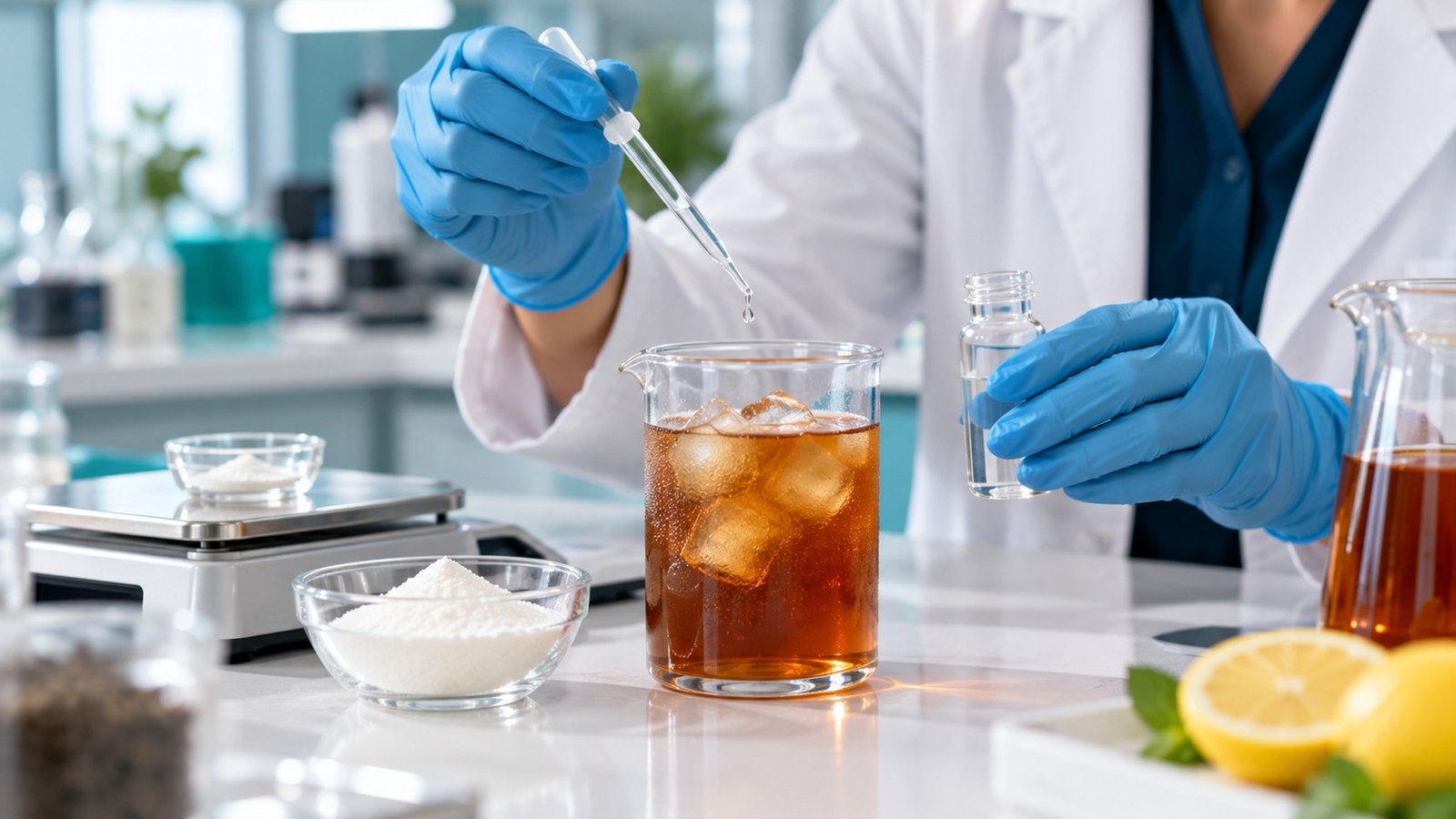
In the UnSugar lab, we put sweeteners side by side in real products: lemonades, flavored milks, protein shakes and gummies. This guide shares the criteria and the tasting method our R&D team uses, so your team can compare sweet protein ingredients fairly, whichever one you choose.
A quick note on where we stand: we develop UnSugar Sweet Protein, a sweet protein based on brazzein. So we have kept the comparison to published data, and we say plainly where each option does well.
The 30-second version
- Sweet protein ingredients are proteins that taste intensely sweet. They are used in tiny amounts and add essentially no sugar to a formula.
- The main options are brazzein, thaumatin, monellin and newer engineered sweet proteins. They differ a lot in taste, linger, heat and pH stability.
- Brazzein-type proteins are the most sugar-like and the most stable of the natural sweet proteins, which makes them the usual pick for sugar reduction in beverages, dairy and protein products.
- Sweet proteins work best in a blend. Start with about 65% of the sweetness from the sweet protein and 35% from your current sweetener.
- Always judge taste and aftertaste in your real product, at matched sweetness, in a blind test.
- From the UnSugar lab: this is the same method we use when we test UnSugar Sweet Protein against stevia, monk fruit and other sweet proteins.
Why formulators are looking at sweet proteins now

Reformulation briefs keep asking for the same three things: less sugar, no artificial sweeteners, and no bitter aftertaste. Stevia and monk fruit solve part of that, but many teams still fight their lingering off-notes at high use levels.
Sweet proteins are a newer tool for food and beverage reformulation. Because they are proteins, not sugars, and because they are hundreds to thousands of times sweeter than sugar, a very small dose can replace a large share of the sugar. The question is which one fits your product.
The five questions that decide your sweetener
Before you compare suppliers, agree on the criteria. These five cover almost every brief we see.
1. Taste profile. How fast does the sweetness arrive, how round is it, and does it taste like sugar in your base?
2. Aftertaste and linger. Is there a bitter, metallic or licorice-like note? How long does the sweetness hang on after you swallow?
3. Sugar, carbs and label. How much sugar or carbohydrate does it add at use level, and how will it read on the Nutrition Facts panel?
4. Clean-label fit. Will your shoppers see it as a familiar, acceptable ingredient? Does it help you drop artificial sweeteners?
5. Formulation performance. Does it survive your heat step, your pH, your shelf life, and your protein or fat level? What does it cost in use?
Meet the sweet protein ingredients
Several proteins found in tropical fruits taste sweet. Four groups matter for formulators today.
Brazzein. From the West African oubli fruit. A small, compact protein (54 amino acids). The most sugar-like taste and the best heat and pH stability of the natural sweet proteins. UnSugar Sweet Protein is based on brazzein.
Thaumatin. From the katemfe fruit. Very potent, with a slow onset and a long, licorice-like linger at higher doses. Often used in small amounts as a flavor modifier and masking agent.
Monellin. From the serendipity berry. Very sweet, with a lingering finish. The natural form loses its sweetness when heated, so it suits cold applications.
Engineered sweet proteins. Designed versions of natural sweet proteins, often based on monellin, built for better stability. The newest option, with the least published data so far.
Side by side: sweet protein ingredients compared
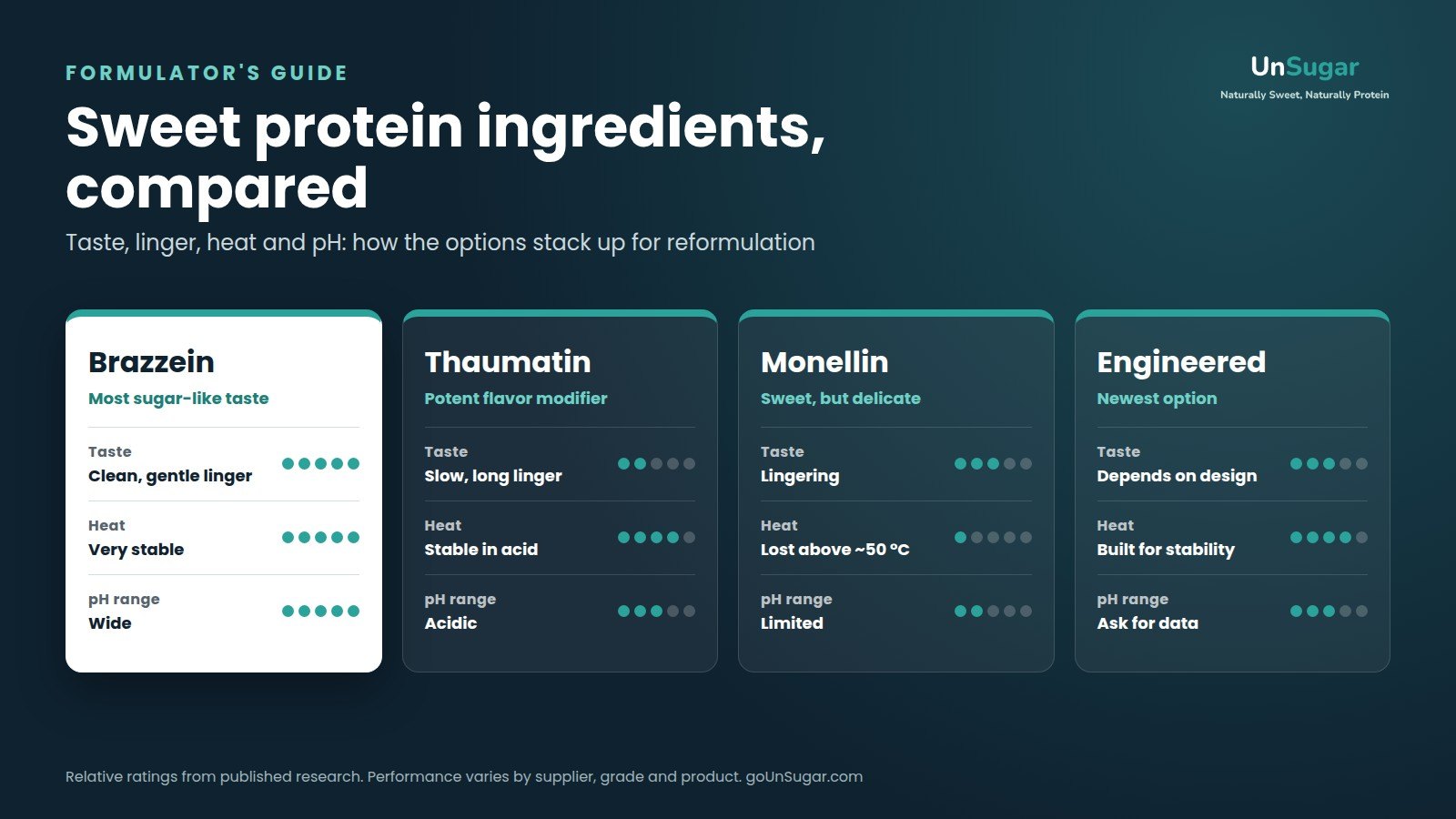
| Brazzein | Thaumatin | Monellin | Engineered | |
|---|---|---|---|---|
| Sweetness vs sugar (by weight) | Up to about 2,000x in published studies | About 2,000 to 3,000x | Up to about 3,000x | Varies by design |
| Taste | Closest to sugar; clean finish with a gentle linger | Slow onset; long linger; licorice-like note at higher doses | Slow onset; lingering sweetness | Depends on the design |
| Heat | Very stable: published tests show sweetness kept after 2 hours at 98 °C in water | Stable to heat in acidic conditions | Natural form loses sweetness above about 50 °C | Built for better stability; ask for data |
| pH | Stable from pH 2.5 to 8 in published tests | Stable in acidic products | Limited in natural form | Ask for data |
| Typical role | Main sweetener in sugar reduction and blends | Flavor modifier and masking at low doses | Limited commercial use | Early commercial use |
| Best fit | Beverages, dairy, protein drinks, powders, sauces | Masking bitterness in small amounts | Cold, short shelf-life products | Case by case |
Typical values from published research and public sources. Performance varies by supplier, grade and food matrix, so always test in your own product.
How sweet proteins compare with the sweeteners you use today
Most teams are not choosing a sweet protein in isolation. They are replacing sugar, or looking for an artificial sweetener replacement for sucralose or aspartame. Here is the wider picture.
| Sucralose / aspartame | Stevia | Monk fruit | Allulose | Sweet proteins | |
|---|---|---|---|---|---|
| Sweetness vs sugar | 200 to 600x | 200 to 400x | 100 to 250x | About 0.7x | Hundreds to thousands of times |
| Taste and aftertaste | Fast and clean to many tasters; some find it flat or chemical | Sweet, then a bitter or licorice-like linger (varies by grade) | Fruity; can linger or turn bitter | Sugar-like, mild | Sugar-like for brazzein-type; longer linger for thaumatin |
| Adds sugar at use level? | No | No | No | Not counted as added sugar on US labels | No |
| Shopper perception | Often seen as "artificial" | Plant-based, widely accepted | Plant-based, widely accepted | A "rare sugar", generally accepted | A protein; new to most shoppers |
| Main job in a blend | Sweetness | Sweetness | Sweetness | Bulk and browning | Clean sweetness; softens off-notes |
Sweetness ranges from the US FDA. Allulose labeling per FDA guidance (2020). Values are typical and vary by grade.
Taste and aftertaste evaluation: how to run a fair test

Most bad sweetener decisions come from unfair tests: water instead of the real product, mismatched sweetness, or tasters who know which sample is which. Use this simple method.
- Match the sweetness first. Dose every option to the same sweetness as your control (for example, a 5% or 8% sugar reference) in your actual base, not in water.
- Test in the real product. Protein, fat, dairy and acid all change how sweet a sweetener tastes. Potency in a protein shake can be much lower than in water.
- Taste blind. Code the samples with three-digit numbers and change the serving order for each taster.
- Score over time. Rate sweetness at the first sip, at 10 seconds and at 60 seconds. This shows onset, peak and linger.
- Name the off-notes. Use a short list: bitter, metallic, licorice, cooling, drying. Rest 15 minutes and cleanse with water and plain crackers between rounds.
A useful trick
If a sweet protein lingers a little in your product, raising the acid by about 10% often shortens the finish without changing the overall taste.
Which sweet protein ingredient fits which product
| Product | What matters most | What usually works |
|---|---|---|
| Beverages (lemonades, teas, sodas, sports drinks) | Clean taste, acid stability, pasteurization or UHT | A brazzein-type protein blended with a little of your current sweetener. Typical cut: 60 to 90% of the sugar. |
| Dairy (flavored milk, yogurt, ice cream) | Rounded sweetness, masking, heat treatment | A brazzein-type protein in a blend. Dairy and fruit-forward products can reach up to 90% less sugar. |
| Snacks and bakery | Heat in low-moisture bakes, bulk, browning | Add the sweet protein after the hottest step (coatings, fillings, seasonings), and use a bulking ingredient such as allulose or fiber. |
| Supplements and protein powders | Dry blending, masking protein notes, dose in a high-protein base | A powder format, blended in steps into the dry mix. Expect a higher dose than in drinks, because protein mutes sweetness. |
The blend beats the solo act
Sugar does more than sweeten. It adds body, browning and texture. No single sweetener does all of that, so the best sugar reduction results come from a system.
The 65/35 starting point
Take 65% of the sweetness from the sweet protein and 35% from your current sweetener. Then adjust by taste.
The sweet protein brings a clean, sugar-like sweetness. The partner sweetener brings a fast first hit and, if it is allulose or a fiber, some body.
Zero glycemic impact and clean label: what to check
Many briefs now ask for clean-label sweeteners and "zero glycemic impact" positioning. Here is how to think about both without over-promising.
- ✓ Sugar and carbs: sweet proteins are proteins used at milligram levels, so they add essentially no sugar or carbohydrate to your formula.
- ✓ Glycemic claims: any glycemic or health claim on your finished product needs its own evidence and a regulatory review. We make no glycemic, metabolic or health claims for UnSugar Sweet Protein.
- ✓ Clean label: sweet proteins are proteins, not synthetic sweeteners, which is why many teams use them to drop sucralose or aspartame. Whether your label can say "natural" depends on how the ingredient is made, so check with your regulatory team.
- ✓ Paperwork: ask every supplier for the specification sheet, certificate of analysis, allergen statement and label declaration before you commit.
A simple scorecard for your shortlist
Score each option from 1 to 5 in your real product. Weight the criteria to match your brief.
| Criterion | Weight (example) | What a 5 looks like |
|---|---|---|
| Taste match to control | 30% | Tasters cannot reliably pick it from the full-sugar control |
| Aftertaste and linger | 20% | No off-notes; sweetness fades like sugar |
| Process stability | 20% | Sweetness holds through your heat step and shelf life |
| Label and clean-label fit | 15% | Short, familiar ingredient statement your team is happy with |
| Cost in use and supply | 15% | Cost per finished unit fits your target, with reliable supply |
Where UnSugar Sweet Protein fits in this picture
UnSugar Sweet Protein is built on brazzein, the most sugar-like of the natural sweet proteins. It is 1,000 times sweeter than sugar, typically replaces 60 to 90% of the sugar in suitable formulations, and tastes like sugar with no bitter aftertaste.
It comes in liquid and powder formats, holds its sweetness through pasteurization and UHT, and works from pH 2.5 to 10. Like every sweet protein, it does its best work in a blend, and it still needs a fair test in your own base. That is why we wrote the method above the way we did.
Quick answers
What are sweet protein ingredients? Sweet protein ingredients are proteins, first found in tropical fruits, that taste intensely sweet. The main ones are brazzein, thaumatin and monellin, plus newer engineered versions. They are used in very small amounts for sugar reduction.
Which sweet protein is best for beverages? Brazzein-type sweet proteins are the usual choice for beverages because they have the most sugar-like taste and hold up well in acidic drinks and through pasteurization. Test them in a blend with a small share of your current sweetener.
Do sweet proteins have an aftertaste? It depends on the protein. Brazzein-type proteins finish clean with a gentle linger. Thaumatin has a slow onset and a long, licorice-like linger at higher doses. Always judge aftertaste at matched sweetness in your own product.
Can sweet proteins replace sucralose or aspartame? Often, yes. Many teams use a sweet protein, usually in a blend, to remove artificial sweeteners while keeping the sweetness level. Match sweetness first, then tune the blend for onset and finish.
Do sweet proteins have zero glycemic impact? Sweet proteins are used at milligram levels and add essentially no sugar or carbohydrate to a formula. Any glycemic claim on a finished product needs its own evidence and regulatory review.
Are sweet proteins clean-label sweeteners? Many teams see them as a clean-label option because they are proteins rather than synthetic sweeteners. Whether a "natural" claim is allowed depends on how the ingredient is made, so check with your regulatory team.
Want to run a fair test?
Tell us your product and your current sweetener. Our R&D team will share this test method, a starting formulation for your category, and liquid and powder samples of UnSugar Sweet Protein.
Request samples: goUnSugar.com/request-samples. Prefer to talk first? Email sales@goUnSugar.com
About UnSugar. UnSugar Sweet Protein is a sweet-protein ingredient that helps US food and beverage teams cut sugar while keeping the taste. It is 1,000 times sweeter than sugar by weight, typically replaces 60 to 90% of the sugar in suitable formulations, delivers a sugar-like taste with no bitter aftertaste, and works alongside existing sweeteners. Learn more at goUnSugar.com.
Sources: US FDA, Aspartame and Other Sweeteners in Food; Novik et al., Sweet-Tasting Natural Proteins Brazzein and Monellin, Foods (2023); US FDA, FDA allows low-calorie sweetener allulose to be excluded from total and added sugars counts
UnSugar makes no health, medical or glycemic claims for UnSugar Sweet Protein. Values in this article are typical and come from published research and public sources; performance depends on the supplier, grade, finished formulation and process. Sugar-reduction ranges are typical starting points in suitable formulations, not guarantees.
Want to taste it in your product?
Request samples and the technical spec, and our team will help you plan the evaluation.
Request Samples →