New application prototypes: beverages, dairy, and confectionery
UnSugar has built reduced-sugar prototypes across three categories so formulators can taste the sweet protein before opening a bench project.

Reading a spec sheet tells you what a sweetener should do. Tasting a finished product tells you what it actually does in your recipe. To close that gap, UnSugar has built a set of reduced-sugar application prototypes around UnSugar Sweet Protein, so a formulator has something to taste on day one, in a real food or drink format, instead of a data table. The prototypes cover the three categories buyers most often ask us to prove first: beverages, dairy, and confectionery.
UnSugar Sweet Protein is a small sweet protein and it is about 500 to 2,000 times sweeter than sugar by weight, and in most reduced-sugar foods our formulators start near the top of that range and adjust by taste. That potency is why milligram doses matter, and it is why a taste is worth more than a paragraph.
What do the beverage prototypes show?
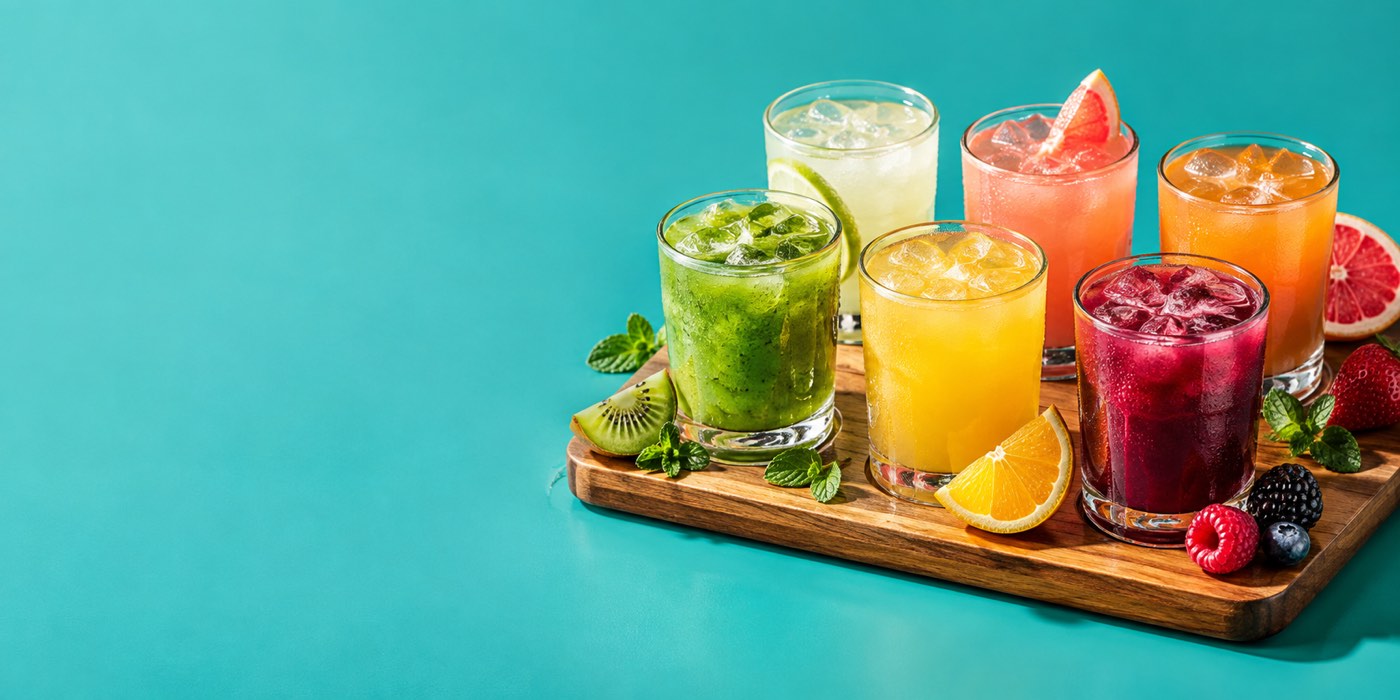
Beverages are where a clean high-intensity sweetener earns its place fastest, because there is little bulk to rebuild and the judgment is sensory. Our beverage prototypes include a reduced-sugar sparkling drink and an iced tea concept. Both show clean sweetness at low use levels, and both sit in the acidic range where the sweet protein performs well. It stays sweet across roughly pH 2.5 to 10, which covers most carbonated soft drinks and teas, though we always confirm behavior in your exact base during trials.
The sparkling prototype is where the off-note rounding becomes obvious. Many reduced-sugar drinks lean on stevia or monk fruit, and both carry a linger consumers notice. Pairing the sweet protein with those sweeteners rounds out the profile and can push the sugar cut deeper than either manages alone, using a starting blend of about 65% of the sweetness from the sweet protein and 35% from the existing sweetener. Tasting a side-by-side, one sample with the rounding and one without, lets your own panel measure the effect. In carbonated drinks the sweet protein can usually carry up to about 70 to 80% of the sweetness, and final performance should be confirmed by bench testing in your own recipe.
What does the dairy prototype show?
The dairy concept, a reduced-sugar yogurt, adds two questions beverages do not. First, dairy carries fat and protein that interact with sweetness and mouthfeel, so a sweetener that reads clean in water can behave differently in a cultured base. Second, dairy formats often see heat. The sweet protein holds its sweetness up to about 98°C like this, which is why it suits formats that see pasteurization or hot fill. As with beverages, we treat stability through processing as a strong starting point and confirm it against your line.
The yogurt prototype shows that a clean sweet protein can sit inside a familiar dairy profile. Because the body digests it as a protein, it contributes no sugars, and at milligram doses its own calories are negligible. We make no health claims on the prototype; we let the sensory result speak and keep the metabolic framing accurate.
What does the confectionery prototype show?
Confectionery is the candid one. A chocolate prototype shows that the sweet protein delivers clean sweetness here too, but it also shows the limit every high-intensity sweetener shares: it replaces sweetness, not sugar's bulk. In chocolate, sugar is a large part of the physical mass and builds structure and mouthfeel, and none of that comes back from a milligram of sweet protein. So the confectionery prototype pairs the sweet protein with a bulking system, using fibers or allulose to rebuild the volume and texture that removing sugar takes away.
We say this plainly because pretending otherwise wastes a formulator's time. The prototype shows two things at once: that the sweetness can be clean and sugar-like at the front, and that a workable bulk strategy is what makes a deep cut in chocolate realistic.
"We would rather a formulator taste the honest version of a chocolate cut than a demo that hides the bulking problem," says a member of the UnSugar applications team. "It builds trust and it saves everyone a round of trials."
How does a prototype shorten evaluation?
A sample kit changes the order of a buyer's evaluation. Instead of reading, sampling the raw ingredient, and only then formulating, the buyer tastes a finished concept first and decides quickly whether the sweet protein belongs in the project. Here is the typical path once a prototype lands well:
- Taste the prototype in the target category and confirm the sensory direction with an internal panel.
- Move to bench trials in your own base, tuning use level, blend, and bulking system for your recipe.
- Lock a specification and receive documentation, including a spec sheet and a certificate of analysis (CoA) for the material you will scale with.
Results differ by category, so we do not promise that a beverage result transfers to chocolate. The prototypes set expectations correctly per category.
What is the regulatory and sourcing footing?
UnSugar Sweet Protein is self-affirmed GRAS, with a GRAS Notice filed with the FDA. We do not describe it as approved by the FDA, because a filed notice is not an approval. Sweet proteins are an established regulated category, which gives buyers a familiar footing for their own review.
The ingredient is the kind of sweetness found in fruit. That production route decouples sweetness from farmland, and it is the same material that goes into every prototype.
Common questions
Can a prototype replace our own bench trials? No. A prototype is a taste-first screen. It tells you fast whether the sweet protein fits your category and profile. Your recipe, use level, blend, and bulking system still need bench work.
Does the chocolate prototype prove sugar can be fully removed? No. It shows clean sweetness plus a bulking strategy. In bulk-heavy formats you rebuild texture with fibers or allulose, because a high-intensity sweetener only returns sweetness.
How do we Request Samples? Tell us your target category and how deep a cut you want. We match you to the closest prototype, discuss your base, and outline the bench, spec, and CoA steps that follow.
To start, Request Samples, or pull the handling and safety detail from the technical data sheet.
Want to taste it in your product?
Request samples and the technical spec, and our team will help you plan the evaluation.
Request Samples →