Reduced-sugar beverages, step by step
A working formulator's walkthrough for cutting sugar in a drink: sweetness target, sweetener blend, mouthfeel rebuild, timing, and processing.
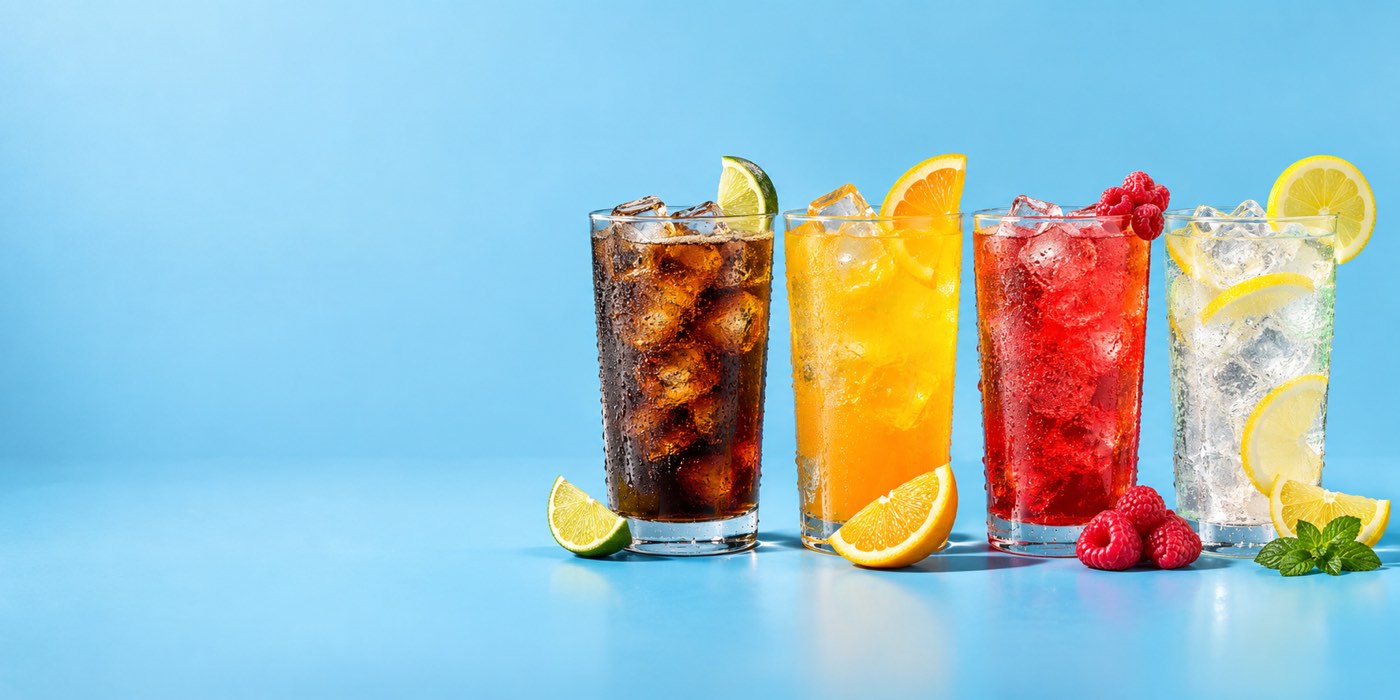

Cutting sugar from a beverage looks like a subtraction problem, but it is not. When you pull sugar out of a soda or an RTD tea, you remove sweetness and you also remove dissolved solids that carried body, viscosity, and a sweetness curve the drinker's palate learned to expect. Replace only the sweetness and the drink can taste thin. This is a walkthrough of how to approach it, in the order the steps happen at the bench.
Step 1: Set the sweetness target
Before touching an ingredient, decide how far you are going. A 30% cut behaves nothing like a 70% cut. Measure your control first. A mainstream cola sits near 10 to 11 grams of sugar per 100 mL. A reduced-sugar claim in most markets needs at least a 30% reduction versus a reference, and low-sugar and no-added-sugar are stricter. Pick the claim, then work back to the grams.
| Tier | Target | What it is |
|---|---|---|
| Moderate | Drop from 10 to about 6.5 g/100 mL (a 35% cut) | A tuning job; real sugar still carries most of the body |
| Aggressive | Drop to about 3 g/100 mL (a 70% cut) | A reformulation; body and timing need active rebuilding |
Know which one you signed up for.
Step 2: Choose the sweetener system
The instinct is to reach for one high-intensity sweetener and dose to target. Resist it. Single sweeteners each carry a signature flaw: stevia brings a bitter, licorice-like note, sucralose can read metallic at higher levels, and most sit at the sweet edge in a way that never quite matches sugar. Blends win because those flaws partly cancel. Two or three sweeteners at lower individual doses stay below the level where each off-note gets obvious, and their curves overlap into something rounder.
UnSugar Sweet Protein earns a place in that blend. It is the kind of sweetness found in fruit, about 500 to 2,000 times sweeter than sugar by weight, and in most reduced-sugar foods our formulators start near the top of that range and adjust by taste. It carries a gentle, clean sweetness on the finish, not the bitter or licorice tail of stevia or monk fruit. In sparkling and alcoholic drinks that clean finish can be a plus.
Two properties suit beverages. It stays sweet across roughly pH 2.5 to 10, which covers a low-pH citrus soda up to a near-neutral RTD coffee, and it holds its sweetness up to about 98°C, which reads well for pasteurized and hot-filled drinks. It is also highly water-soluble, so dosing into a batch is not a dispersion headache. Confirm the numbers that matter to your line in your own bench and pilot trials.
A good starting blend takes about 65% of the sweetness from the sweet protein and 35% from the sweetener you already use. In carbonated drinks the sweet protein can usually carry up to about 70 to 80% of the sweetness. This can help replace 60 to 90% of the sugar in suitable formulations, and final performance should be confirmed by bench testing in your own recipe.
A worked dosing example
The sample bottle holds enough sweet protein to replace up to about 5 kilograms of sugar. You dose it in tiny amounts, so a little goes a long way.
Say your reduced drink should taste as sweet as 6 grams of sugar per 100 mL, and you run the 65/35 blend. About 4 grams of that sweetness comes from the sweet protein, so a little goes a long way, and your existing sweetener carries the rest. Round the numbers and taste. Because the body digests it as a protein, it contributes no sugars, and at milligram doses its own calories are negligible.
Step 3: Rebuild the mouthfeel you removed
This is where most reduced-sugar drinks fall down. Sugar at 10 g/100 mL is doing quiet structural work: it raises viscosity, lowers free water for shelf life, and gives the drink weight on the tongue. Take it out and the liquid can feel like flavored water. Rebuild body from a few directions at once:
- Thickeners and stabilizers for viscosity: small additions of high-methoxyl pectin (which tolerates low pH well), CMC, or gellan restore flow and cling. Doses are fractions of a percent, so titrate and taste rather than just measuring viscosity.
- A bulking sweetener such as allulose at low levels adds a touch of dissolved solids and contributes to the target too.
- Mineral salts in trace amounts round out the mid-palate and reduce the empty character. This is subtle and easy to overdo.
Body is a stack, not a switch. Expect several rounds.
Step 4: Manage the timing
Sugar has a specific timing: a moderate onset, a full peak, and a clean fade. High-intensity sweeteners can distort this. Two useful levers:
Acidity is your onset control. The acid system, citric, malic, or phosphoric, shapes how quickly sweetness and tartness register. A drink that reads as sweetness-lagging often just needs its acid rebalanced, not more sweetener. Raising the acid by about 10% is a simple way to a shorter, cleaner finish.
Blend ratios shape the tail. If a co-sweetener lingers, lean more of the sweetness onto the cleaner-fading components. A flavor top-note and a whisper of salt can bridge a mid-palate dip so the curve feels continuous. And remember: Brix drops sharply when you remove sugar, but the sweetness does not, so taste rather than trusting the Brix meter as a sweetness check.
Step 5: Confirm it survives processing and clears the label
A formula that sings in a beaker still has to go through your line. Pasteurization and hot-fill mean heat and hold time, and thin low-solids liquids can behave differently under thermal stress than the full-sugar control did. The heat data is encouraging, but hydrocolloid viscosity, flavor volatiles, and acid balance can all shift with processing, so run a real pilot on your equipment before you commit.
Then walk the label. Confirm every ingredient's declaration and permitted use levels for your markets, check that your reduction actually meets the claim threshold against the correct reference, and request the current allergen and dietary statements and the label declaration position with the technical documents.
Common questions
Can I swap sugar one-for-one with a sweet protein? No. You will match sweetness and miss body, timing, and preservation. It replaces sweetness at milligram doses; you still need bulking agents, thickeners, and an acid rebalance for a deep cut.
Will it hold up in a low-pH soda that gets pasteurized? The stability profile, sweet across roughly pH 2.5 to 10 and sweetness held up to about 98°C, reads well for acidic and heat-treated drinks. Your matrix is unique, so confirm retention on your own line.
How deep a cut is realistic before the drink noticeably changes? A 30 to 40% reduction is usually a tuning exercise you can hide well. Past about 60 to 70% you are rebuilding mouthfeel, and success depends more on your thickener and timing work than on the sweetener choice.
Start with an honest target, blend rather than lean on one sweetener, and spend most of your bench time on body and timing. To try it in your own base, Request Samples, or pull the dosing and stability detail from the technical data sheet.
Want to taste it in your product?
Request samples and the technical spec, and our team will help you plan the evaluation.
Request Samples →